
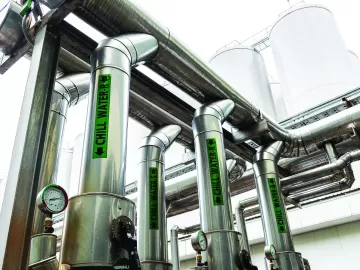
Cooling Systems
Temperature control of the musts during the fermentation process is required for the production of high quality wines. Alcoholic fermentation is the chemical reaction in which yeast is used to transform the natural sugars of the fruit into alcohol. The heat generated by this exothermic reaction has to be managed. If must temperatures are allowed to reach the 85°F to 105°F range the reaction will be stopped. This results in high sugar content and an unstable product that requires the addition of sulphur dioxide (SO2) to allow it to be stored without spoiling. In general, optimal fermentation temperatures are 65°F - 68°F for white wines and 77°F for red wines.
Industrial plants are major consumers of water. Water is used in many processes. Sustainability projects focus on reducing the consumption of water and the energy-costs associated with cooling water so it may be effectively used.
[ Read Full Story ]
This article reviews two major processes in paper mills: compressed air quality and air compressor cooling. The central air compressor room was expanded and relocated at the largest privately owned paper mill in Canada. The compressor space was required by a plant expansion, which would occupy the original compressor space for increased production.
[ Read Full Story ]
It is widely recognized that compressed air systems account for ten percent of all electricity and roughly sixteen percent of U.S. industrial motor system energy use. Seventy percent of all manufacturing facilities in the United States use compressed air to drive a variety of process equipment.
[ Read Full Story ]
Compressed Air Best Practices spoke with Peter Kyriacopoulos. Mr. Kyriacopoulos is the General Manager/VP USA Region East for Atlas Copco Compressors.
[ Read Full Story ]