Industrial Energy Savings    

Cooling Systems

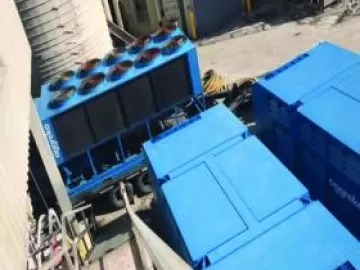
Industrial plants are major consumers of water. Water is used in many processes. Sustainability projects focus on reducing the consumption of water and the energy-costs associated with cooling water so it may be effectively used.
This major mill complex upgraded their compressed air system and thereby eliminated $500,000 in annual rental compressor costs, reduced annual cooling-water costs by $500,000, and reduced electrical energy costs by $135,000 per year.
This month’s article reviews the 7th of the key elements for Low Cost – High Value energy savings.  Each of the previous articles reviewed types of projects which are applicable at many facilities.  The projects ranged from simple procedural actions such as turning off equipment when it is not making a product to more complex, like adding a water to air heat exchanger and extracting heat from the coolant loops to provide warmed make-up air.
It is widely recognized that compressed air systems account for ten percent of all electricity and roughly sixteen percent of U.S. industrial motor system energy use. Seventy percent of all manufacturing facilities in the United States use compressed air to drive a variety of process equipment.
Compressed Air Best Practices spoke with Peter Kyriacopoulos. Mr. Kyriacopoulos is the General Manager/VP USA Region East for Atlas Copco Compressors.
Reducing energy costs and pollution emissions involves many areas within an industrial facility.  My studies have found seven (7) key (or common) areas where low cost practical projects can be implemented.  Combined, these projects provide savings exceeding 10% of the annual energy spend with an average payback of less than one year.This month’s article will focus on the opportunities for using waste heat sources to supplement winter building heat.
Reducing energy costs and pollution emissions involves many areas within an industrial facility.  My studies have found seven (7) key (or common) areas where low cost practical projects can be implemented.  Combined, these projects provide savings exceeding 10% of the annual energy spend with an average payback of less than one year.