
Key Safety Requirements for Compressed Air Systems, Equipment and Workers in Mining Operations
This article covers a small portion of the documented hazards, regulatory requirements and potential citations tied to compressed air in mining settings. It pulls from Mine Safety and Health Administration (MSHA) standards, case literature and established safety guidance. It should be read as an orientation and not as a compliance manual.
The purpose is to provide background information so the reader can interact more intelligently with clients and qualified safety professionals. The miner must take responsibility for their own safety, which requires an understanding of the current MSHA standards in addition to the site’s specific risks. That’s because regulations change and enforcement priorities shift, and the details of the facility you’re working in matter more than anything written here.
The article shares the standards without comment on who is considered a miner and what record-keeping is required.
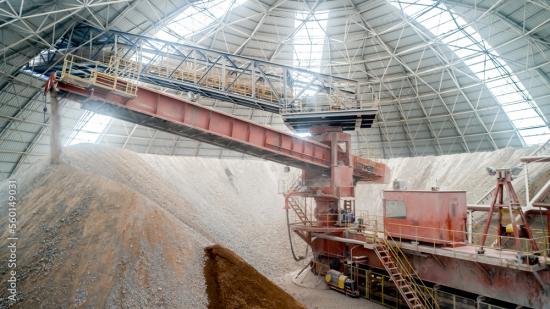
Creating a Culture of Safe Compressed Air Use in Mining
DuPont was a pioneer in safety training, starting with the publication of work rules in 1811, establishing the concept that safety is a management responsibility. As the son and the grandson of lifetime DuPont employees, the concept was part of our upbringing to the point where we wore steel-toe boots to cut the grass.
Mining is among the most hazardous industries for a compressed air professional. As a consequence, it’s vital that companies working in mine sites ensure all employees have the full and appropriate training on safety. In many cases, it’s a requirement. While there are cases where it’s not a requirement, the training is still helpful and recommended for installing a safety-first culture.
|
§ 56.14100 Safety defects; examination, correction and records. (a) Self-propelled mobile equipment to be used during a shift shall be inspected by the equipment operator before being placed in operation on that shift. (b) Defects on any equipment, machinery, and tools that affect safety shall be corrected in a timely manner to prevent the creation of a hazard to persons. (c) When defects make continued operation hazardous to persons, the defective items including self-propelled mobile equipment shall be taken out of service and placed in a designated area posted for that purpose, or a tag or other effective method of marking the defective items shall be used to prohibit further use until the defects are corrected. (d) Defects on self-propelled mobile equipment affecting safety, which are not corrected immediately, shall be reported to and recorded by the mine operator. The records shall be kept at the mine or nearest mine office from the date the defects are recorded, until the defects are corrected. Such records shall be made available for inspection by an authorized representative of the Secretary. |
Subsection (b) is the broadest and one of the most cited categories, and for that reason, it’s important to understand. It’s deliberately vague as it’s a performance-based standard. No document can cover every potential hazard a mine site and its operators can create. The upside of this is safety, but the downside is that the MSHA inspector has quite a bit of discretion. That discretion makes for a safer working environment, but it also creates a need for a challenge system for mine site operators when they believe the inspector has gone too far. In one case, a mine was written up for missing a light bulb in a refrigerator, as it presented a shock hazard.
Some of the more common issues we encounter in mine sites are:
-
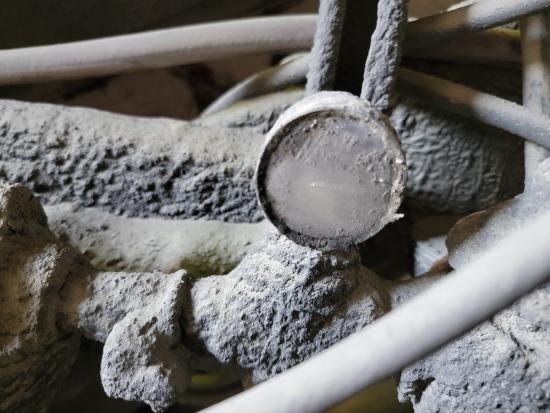
Unreadable pressure gauges: This is one of the most common issues encountered, especially on remote receiver tanks. Often, the gauges are busted, or the lens has clouded over.
-
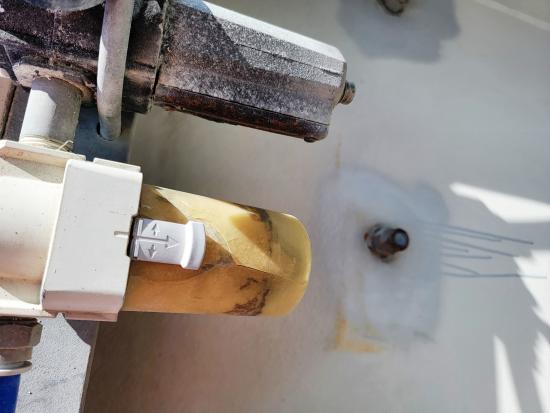
Deteriorating plastic bowl guards: This is one of the most hazardous problems we see in the industry, and it often goes undetected. While it’s rare to see, old plastic guards can fail catastrophically. Ultraviolet light, extremely dry air and some air compressor lubricants can lead to weakening of the plastic. Some vendors offer a double plastic wall, which protects equipment from dry air and air compressor lubricant. We haven’t seen evidence regarding degradation in ultraviolet light. For that reason, metal bowl guards are recommended.
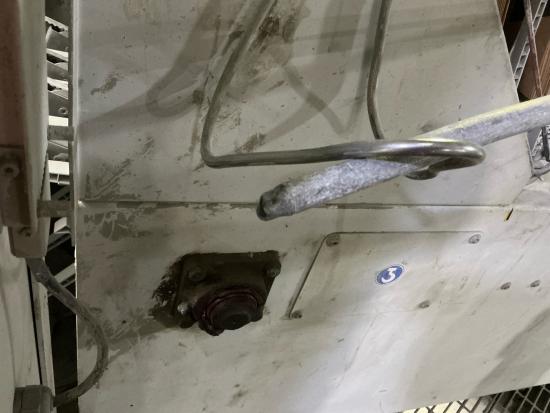
- Safety blow-off guns: While this is associated with open blowing towards personnel, it belongs in this category, as well. One of the most popular safety blow guns is the Long John 75, which has a safety tip on it. Operators often use the tip as a mechanical clearance device in combination with the compressed air, which creates a little bit of wear each time it encounters material. Over time, it’s common to see these tips worn away.
- Delaminating hoses: Hose safety has its own subsection, which doesn't address the degradation of the hose itself. That falls under this section. Delaminating can often be seen as bubbles forming underneath the hose, as the interior lining has failed.
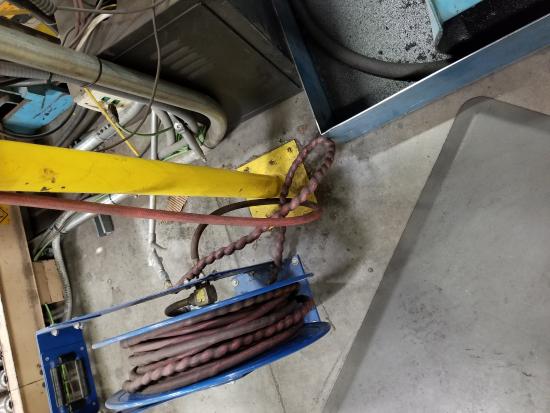
- Lack of drainage on tanks: The more frequent problem here is a broken manual valve on the drain, a plugged discharge or inadequate access to the manual drain.
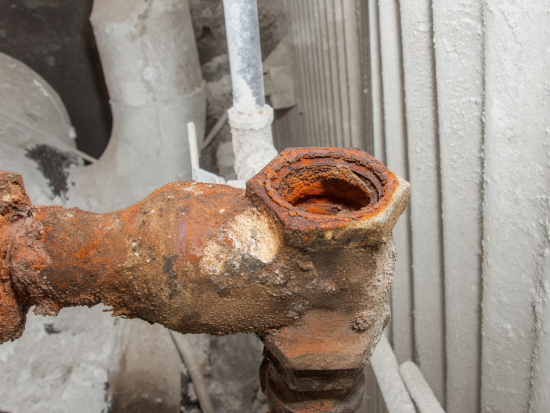
- Degraded piping downstream of an improperly maintained deliquescent dryer: This occurs less and less, but piping exposed to poorly maintained deliquescent dryers can degrade significantly. In one mine site, an operator we worked with attempted to put a Chicago fitting on a pipe downstream of a poorly maintained deliquescent dryer. As he wrestled with the fitting, the pipe failed, spraying bits of rust and metal through the area.
|
56.13010 Reciprocating-type air compressors (a) Reciprocating-type air compressors rated over 10 horsepower shall be equipped with automatic temperature-actuated shutoff mechanisms which shall be set or adjusted to the compressor when the normal operating temperature is exceeded by more than 25 percent. (b) However, this standard does not apply to reciprocating-type air compressors rated over 10 horsepower if equipped with fusible plugs that were installed in the compressor discharge lines before November 15, 1979, and designed to melt at temperatures at least 50 degrees below the flash point of the compressors' lubricating oil. |
Since rotary screw air compressors are the primary source of air for most mine sites, there are often reciprocating compressors serving dedicated applications. The most common location where this standard applies is in maintenance or tire shops, where the higher pressure requirement of torque wrenches requires reciprocating air compressors. Most of these operations have 5-10 horsepower (hp) air compressors, bringing them below the threshold. However, some shops have larger reciprocating air compressors that are above the threshold but have not been equipped with a high air temperature switch. We know of one citation in the half-dozen or so examples where these air compressors are present.
|
§ 56.13012 Compressor air intakes Compressor air intakes shall be installed to ensure that only clean, uncontaminated air enters the compressors. |
Mine sites are often filled with dirt, and adequate maintenance of the inlet filter is likely to meet this requirement, but it’s still at the inspector’s discretion. Where the surrounding air is reasonably clean and contains no harmful vapors, fumes or excessive process dust, the air compressor’s properly maintained OEM inlet filter should ordinarily satisfy §56.13012. The mere presence of an inlet filter, however, would not cure an intake located in contaminated air or fitted with filtration inadequate for the actual environment.
Some mine processing facilities have the potential for ingesting diesel fumes (load-out areas) or chemical contamination (gold, copper), so those should be dealt with on a one-by-one basis.
One area of concern is the potential increase in the concentration of vapors in the air compressor lubricant. It would take a chemist or chemical engineer to figure out what the potential interactions between the lubricant and the vapor are through the whole cooling cycle. It’s better to test lubricant for contamination on a regular basis and keep air compressors from ingesting chemical vapors.
|
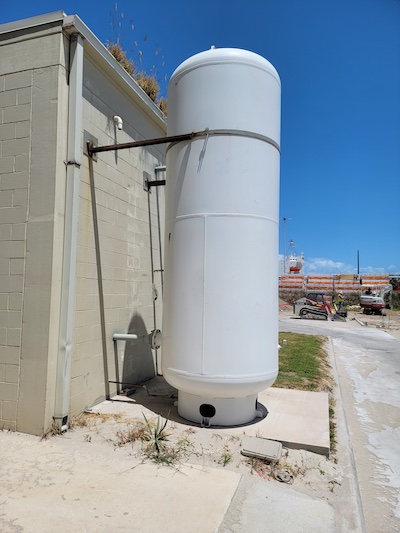
§ 56.13011 Air receiver tanks Air receiver tanks shall be equipped with one or more automatic pressure-relief valves. The total relieving capacity of the relief valves shall prevent pressure from exceeding the maximum allowable working pressure in a receiver tank by not more than 10 percent. Air receiver tanks shall also be equipped with indicating pressure gauges that accurately measure the pressure within the air receiver tanks. |
Most operations do a strong job with receiver tank maintenance. However, there are plants whose treatment of receiver tanks leaves them vulnerable to multiple citations. These include:
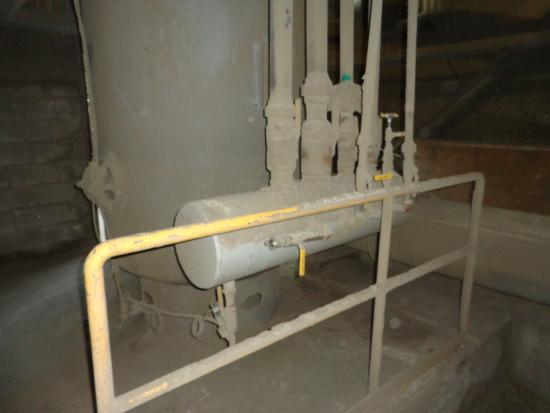
- Non-ASME pressure vessels: 30 CFR 56.13001 requires all boilers and pressure vessels be constructed, installed and maintained in accordance with the ASME Boiler and Pressure Vessel Code. ASME code requires a stamp when pressure is greater than 15 psig (1.0 barg) and the diameter is greater than 6 inches. The most common citable location where this happens is European-produced pressure vessels for low-pressure (29-44 psig, 2-3 bar) process bag houses. A second issue is when plants create homemade distribution manifolds for Chicago fittings.
- Faulty or missing valves and pressure gauges: Every storage tank should have both of these.
Two areas worth considering are safety valve testing and pressure gauges on rotary screw air compressor separators.
- The MSHA standard doesn’t mention the frequency of testing of safety valves, so it may come down to the manufacturer’s recommendation, the inspector’s discretion, the state’s requirements or service conditions. Some of the valves one encounters in the field are covered in dust and likely haven’t been tested in years. Safety valves should be placed where it’s easy for workers to remove them for testing. The discharge of the valve should be positioned so as not to endanger a worker’s safety if and when the valve discharges.
- Several manufacturers use a pressure transducer to display separator-sump pressure on the air compressor control panel. While this may satisfy the functional requirement for pressure indication, it raises difficult questions. The separator is, or should be, an ASME pressure vessel, although it’s not entirely clear whether or not it would also be classified as an “air receiver tank” under the standard. If the controller or display fails while the separator remains pressurized or the air compressor continues to operate, the vessel may be left without a functioning pressure indication. At that point, continued operation could fail the standard and would, at a minimum, create a safety-related defect requiring prompt correction.
|
56.13021 High-pressure hose connections Except where automatic shutoff valves are used, safety chains or other suitable locking devices shall be used at connections to machines of high-pressure hose lines of 3/4-inch inside diameter or larger, and between high-pressure hose lines of 3/4-inch inside diameter or larger, where a connection failure would create a hazard. |
This hazard is one of the most frequent in mine sites when it comes to compressed air. The two most common safety-related pieces on hoses tend to be safety pins or whip checks. There are plenty of videos on the internet about the danger a decoupled hose presents to an employee.
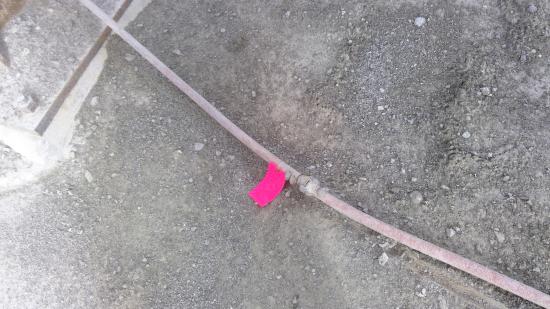
Safety pins are the most common safety element and prevent the hose from twisting on itself. The pins have an interference fit, which would likely be considered a “suitable locking device.” There is precedent for this. In one ruling, the judge reviewing an inspector’s report wrote, “The evidence consists mainly of the testimony of the inspector and is not in dispute on most aspects of the charge. The inspector did testify that he found – or that he observed the jack leg drill in use, and while he did not see an automatic shutoff valve, he believed that there may [not] have been one. He also observed that the machine was of the type that normally requires the three-quarter inch inside diameter hose. He also observed that the jack leg drill did not have the safety chain or other suitable locking device. A locking pin was acceptable to the inspector, and abatement consisted of inserting of the locking pin.” (W.A Bowles vs. Sol (MSHA))
This is not legal advice, and the judge did not expressly hold that every locking pin is automatically a suitable device in all cases. In this specific case, he considered the installation of a locking pin as satisfactory abatement of the violation.
With that as background, safety chains are a clear upgrade on locking pins as they provide a second level of protection. The pin prevents rotation and may prevent decoupling, but offers no restraint if the hose separates. A properly installed safety chain limits the movement of the hose and reduces any whipping action, reducing the likelihood of personnel injury and secondary damage to the surrounding equipment.
|
§ 56.13015 Inspection of compressed-air receivers and other unfired pressure vessels (a) Compressed-air receivers and other unfired pressure vessels shall be inspected by inspectors holding a valid National Board Commission and in accordance with the applicable chapters of the National Board Inspection Code, a Manual for Boiler and Pressure Vessel Inspectors, 1979. This code is incorporated by reference and made a part of this standard. It may be examined at any Metal and Nonmetal Mine Safety and Health District Office of the Mine Safety and Health Administration, and may be obtained from the publisher, the National Board of Boiler and Pressure Vessel Inspectors, 1055 Crupper Avenue, Columbus, Ohio 43229. (b) Records of inspections shall be kept in accordance with the requirements of the National Board Inspection Code, and the records shall be made available to the Secretary or his authorized representative. |
This standard is self-evident.
|
§ 56.13017 Compressor discharge pipes Compressor discharge pipes where carbon build-up may occur shall be cleaned periodically as recommended by the manufacturer, but no less frequently than once every two years. |
Pipeline fires have been significantly reduced in the last 40 years as the switch to rotary screw air compressors with high flashpoints has been adopted in many mine sites. There are still a few reciprocating air compressors running on mineral oils, and we have observed one pipeline fire in our company’s 23 years. These do occur infrequently.
There’s one lingering problem in the rotary screw air compressor world, and that’s the use of automatic transmission fluid as an air compressor lubricant. This is done less and less, but the results can be even more catastrophic. We know of one plant that used ATF, and the check valve on the separator failed, spraying ATF into the back of the starter panel. This caused a small fire.
|
§ 56.13019 Pressure system repairs Repairs involving the pressure system of compressors, receivers, or compressed-air-powered equipment shall not be attempted until the pressure has been bled off. |
This is also self-evident.
|
§ 56.13020 Use of compressed air At no time shall compressed air be directed toward a person. When compressed air is used, all necessary precautions shall be taken to protect persons from injury. |
The obvious case for this is workers using compressed air to blow off dirt or dust on their person. This practice was common and is getting less so, but it's still prevalent enough that it’s problematic. The eyes are vulnerable to compressed air-driven particulate, but concern also exists for the skin, as well. There are quite a few gory pictures of hand injuries some cement plants use to emphasize the importance of not directing the air towards the skin. Compressed air should never be directed at a person.
A second common but often unrecognized problem is the hazard created by a piece of equipment’s exhaust. Air cannon discharges often create a hazard because of their peculiar geometry and how they are often mounted.
MSHA Definitions and RequirementsTraining R30 CFR § 46.2 — Definitions (g) Miner means: (1) Any person, including any operator or supervisor, who works at a mine and who is engaged in mining operations. This definition includes independent contractors and employees of independent contractors who are engaged in mining operations; and (2) Any construction worker who is exposed to hazards of mining operations. The definition of “miner” does not include scientific workers; delivery workers; customers (including commercial over-the-road truck drivers); vendors; or visitors. This definition also does not include maintenance or service workers who do not work at a mine site for frequent or extended periods. MSHA Guidance on “Frequent or Extended Periods” While the regulation itself uses the terms “frequent or extended periods,” MSHA provides the following definitions in its official compliance guidance:
Summary
Requirements 30 CFR Part 46 governs training for miners at surface metal and nonmetal mines. § 46.3 Training plans. You must develop and implement a training plan that is approved by MSHA and that addresses the training requirements in this part for all miners. § 46.5 New miner training. You must provide each new miner with no less than 24 hours of training... § 46.6 Newly hired experienced miner training. You must provide each newly hired experienced miner with training... § 46.8 Task training. You must provide task training… to each miner before the miner performs a new task or a task that has changed and that affects the miner’s health or safety. § 46.9 Annual refresher training. You must provide each miner with no less than 8 hours of annual refresher training... Note: Task training under § 46.8 is particularly relevant for work involving compressed air systems, compressors, receivers, and boilers. Parallel training requirements exist under 30 CFR Part 48 for operations covered by that part. Recordkeeping/Paperwork Requirements § 56.13015(b) Inspection of compressed-air receivers and other unfired pressure vessels. Records of inspections shall be kept in accordance with the requirements of the National Board Inspection Code, and the records shall be made available to the Secretary or his authorized representative. § 56.13030(c) Boilers. Records of inspections and repairs shall be kept in accordance with the requirements of the ASME Boiler and Pressure Vessel Code and the National Board Inspection Code. The records shall be made available to the Secretary or his authorized representative. General Equipment and Safety Records § 56.14100(d) Safety defects; examination, correction, and records. Defects on self-propelled mobile equipment affecting safety, which are not corrected immediately, shall be reported to and recorded by the mine operator. The records shall be kept at the mine or nearest mine office from the date the defects are recorded until the defects are corrected. Such records shall be made available for inspection by an authorized representative of the Secretary. Training Records 30 CFR § 46.9 Records of training (a). You must record and certify on MSHA Form 5000-23, or on a form that contains the information listed in paragraph (b) of this section, that each miner has received training required under this part. (b) The form must include: (1) The printed full name of the person trained; (2) The type of training, the duration of the training, the date the training was received, and the name of the competent person who provided the training; (3) The name of the mine or independent contractor, MSHA mine identification number or independent contractor identification number, and location of training... Records must be maintained and made available for inspection as required. |
This article is dedicated to the memory of Bruce Sellers, Palmetto State Training, who did all he could to keep us safe in mine sites. His enthusiasm and dedication to safety allowed us to share concerns with customers, making their operations safer. Special thanks go out to Brian Sellers, Bruce’s son, and Daryl Hollnagel, CAC’s corporate attorney, for reviewing this document.
About Paul Edwards

Edwards started with Ingersoll Rand in 1982 and worked in various field and office positions. He opened Compressed Air Consultants in 2003 as an independent audit organization with the tagline “It’s about money, not air.” Living up to that standard means the company’s advice often differs from traditional approaches, but the goal is to drive operating costs down and productivity up while spending as little capital as possible.
About Compressed Air Consultants
Compressed Air Consultants is an independent, 20-year-old auditing firm. It specializes in creating ROI projects through demand-side analysis and improved use of existing assets. In most of it audits, gains can be realized without purchasing new air compressors. Its three principles (two in the United States and one in Europe) have 100 years of combined compressed air experience. Visit https://www.loweraircost.com.
To read similar articles on Compressed Air Standards, please visit
https://www.airbestpractices.com/standards.
Visit our Webinar Archives to listen to expert presentations on Compressed Air Standards at https://www.airbestpractices.com/webinars.
