Plastics

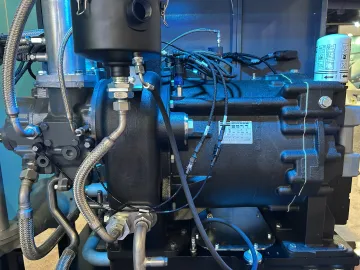
Compressed air boosters are engineered to amplify medium-pressure air (90–150 psig) to high-pressure ranges up to 435 psig (30 barg) using oil-free rotary screw technology, IE5 permanent magnet motors and advanced VSD+ drivetrains for improved turndown and energy efficiency. By combining Class 0 oil-free air quality, synchronous PM motor performance (up to 97% efficiency) and intelligent controls, next-generation booster systems deliver higher flow stability, reduced specific energy consumption and seamless integration into existing compressed air networks.

20 Years of Case Studies: Plants Sharing Best Practices

For 20 years, Compressed Air Best Practices® Magazine has published articles focused on helping manufacturers reduce power demand, lower water consumption, and improve the performance of compressed air, cooling, blower and industrial vacuum systems. In this article, we highlight a sampling of those stories across the following industries: Plastics and Packaging Food and Beverage Automotive and Transportation Cement, Building Materials, and Mining Metals, Pulp, and Paper Pharmaceuticals, Healthcare, and Research Wastewater Treatment 

R&D Labs Shifting to N2 Generation

This article explores how on-site nitrogen generation, using PSA and membrane technologies, enables engineers to produce nitrogen on demand with greater control over purity, flow and pressure. It also highlights real-world applications and the operational benefits of improved uptime, reduced handling risks and lower total cost of ownership.

High-Altitude Mining and Steel Production in Peru

Before CAGI data sheets were created, air compressor distributors and their customers could only go by the manufacturers’ claims. He found there wasn’t any uniformity to the numbers manufacturers put out, so making comparisons was challenging. Some compressed air manufacturers measured capacity from the bare airend, while others measured from the air compressor’s outlet.

Plastics Plant Audit Improves VSD Air Compressor Arrangement

Estimates based on the captured data show 567,000 kWh costing \$23,375 per year, while feeding an average of 240 cfm to the plant. Estimated savings for upgrading the VSD air compressor to higher efficiency and higher capacity, converting failing desiccant compressed air dryers to cycling refrigerated compressed air dryers and reducing wasted demand total \$9,160 per year, resulting in 39% lower energy use. 

Sustainable Operations in Practice at Klöckner Pentaplast

In most of our factories, we have installed detailed energy monitoring systems at multiple points along production lines, including air compressors, chillers and lights. These systems feed into a digital dashboard that displays energy consumption throughout the factory. For data visualisation, we use dashboards that aggregate data collected via SAP from production lines and allows us to visualise the data at a high level.

Compressed Air Audit Uncovers Waste at a Plywood Plant

A comprehensive compressed air assessment was conducted at a Canadian plywood facility. The purpose was to determine the proper size of any new air compressors and to look for ways to improve the system. Analysis of the data and a demand-side audit finds significant energy savings could be gained if the system is upgraded through air compressor replacements and demand-side reductions.

Air Compressor and Chiller Innovations at NPE2024

NPE2024: The Plastics Show took place in Orlando, Florida, May 2024, and Compressed Air Best Practices® Magazine and Chiller & Cooling Best Practices Magazine were there to cover the highlights. This year’s conference drew over 50,000 registrants, including 15,000 from outside the United States. Filling both buildings of the Orlando Convention Center, the conference included zones dedicated to bottling, recycling and sustainability, material science, advanced manufacturing, mold-making and packaging. 

ABC Compressors Supports Logoplaste Embedded Wall-to-Wall Sustainable Manufacturing

Logoplaste, based in Cascais, Portugal, introduced its embedded wall-to-wall manufacturing model to reduce waste and increase efficiency. The model also results in a more economically and environmentally sustainable method of production of rigid plastic packaging since it eliminates the need for a separate secondary packaging plant and the logistics associated with transporting empty bottles. 

PET Plants Using Boosters for High Pressure Air

The use of high performance boosters to raise low pressure air (100 psig) to high pressure air (500-600 psig) for blow molders is very power efficient and offers good operating performance and reliability when well applied. 

DOE Better Plants Partners Get Serious About Compressed Air Systems

Compressed air is used in all the company’s plants and is often the single largest energy end use within them. As a result, compressed air energy-saving measures are often replicable across the company and offer significant positive impacts. One area of focus is with compressed air leaks since they are “the best low hanging fruit to focus on and they always keep popping up and waste energy”.

Why a Centrifugal Air Compressor May Be the Better Choice

When selecting an air compressor for your manufacturing operation, the common choice is the industry-standard rotary screw compressor. Known as the work horse of compressed air machinery, the rotary screw compressor comes in a multitude of sizes and power levels. However, centrifugal compressors have seen some exciting technological progress in recent years and offer a wide range of pressures, flow and turndown. Long known for their longevity and durability, they offer higher efficiency, even qualifying for energy rebate programs offered by local utilities and all, notably, produce Class 0 oil free air.

Making an Impact at Berry Global

Berry Global was established in 1967 as a small hometown company, based in Evansville, Indiana. Today it is still headquartered in Evansville but has grown to 48,000+ global employees and more than 295 locations. Generating \$12.6 billion in 2019 pro forma net sales, Berry Global creates innovative packaging and protection solutions.

Schoeneck Containers Leaves No Stone Unturned with Compressed Air

When compressed air is essential to the production of up to one million plastic containers per day there’s little room for error. That’s why Schoeneck Containers, Inc. (SCI) leaves no stone unturned to ensure its compressed air systems run smoothly at all times and without fail at its bustling facilities in Wisconsin.

Sustainability Pillars at Intertape Polymer Group Inc.

In February 2021, Compressed Air Best Practices® Magazine interviewed members of the Intertape Polymer Group Inc. (IPG) Sustainability Pillars team to gain an understanding of the work being done to improve energy efficiency. The team members interviewed were Michael Jones (Director of Corporate Energy), Michael Deitering (Senior Project Engineer), Jarrod Knapp (Maintenance Manager) and Mark Secord (Engineering Group Leader).  

Winpak Reduces Demand by 33% and Switches to Oil-Free Air Compressors

By making changes primarily focused on compressed air uses, Winpak, an international plastics products manufacturer based in Winnipeg, Manitoba, Canada, increased compressed air production capacity and reduced annual energy consumption by 33%. These benefits have been accomplished while the company was making the switch to lubricant-free compressed air to support product quality goals. This article discusses some of these changes and addresses measures that could be implemented in any compressed air system.

Pneumatics Boost Productivity of Doroti Pack Thermoforming Machine

For more than 20 years, Hungarian-based Doroti Pack Ltd. has specialized in the production and servicing of state-of-the-art packaging machines. Their focus is on developing, manufacturing, producing and selling premium-quality packaging equipment, including their line of DorPack thermoforming machines which are often used for food products such as fresh meat, fish, dairy products, bakery ware, confectionery and ready-cooked foods. Dorati Pack chose to incorporate Aventics pneumatic components in latest thermoforming machine for optimal productivity and machine longevity.

Plastics Plant Saves 55% in Energy with VSD Air Compressor and Sequencer

The plant produces both molded and blow molded plastic parts on a 5 day per week, three shift schedule. Production and maintenance sometimes occurs on weekends, occasionally requiring the air compressors to run on a 24 x 7 basis so the practice was to leave the compressed air system always pressurized. The system consisted of three modulating lubricated screw compressors one sized at 150 hp and the others 125 hp (3 units), each controlled with their local compressor controllers.

Pepsi Bottling Plant Upgrades Oil-Free Compressed Air Systems

The Pepsi bottling plant in Winnipeg, Manitoba has upgraded both their main 100 psi compressed air system and their 600 psi PET bottling system in two separate projects. The system improvements have saved the company both maintenance and electrical operating costs, and even reduced some winter heating demand.

Plastic Extruder Reduces Compressed Air Use by 367 cfm

A plastic product manufacturer spends an estimated \$245,000 annually on electricity to operate the air compressors in a compressed air system at its plant located in a midwestern U.S. state.  The main manufacturing process is plastic extruding. The current average electric rate, at this plant, is 7 cents per kWh. The compressed air system operates 8,760 hours per year and the load profile of this system is relatively stable during all shifts.

Plastic Extruder Optimizes Blow-Offs for Cooling

At a Midwest window manufacturing plant, the cooling process for the plastic frame pieces, after leaving the extruder, was critical to process productivity and quality. Too much cooling air (or not enough cooling air) would generate scrap and rejected product. The plants’ 17 extruders and 55 separate blow-offs in these lines had similar cooling stations at the cooling boxes. They consisted of about three hoses at each exit frame angled down to the extruded piece moving past it. The compressed air flow was controlled by a manual control valve set by an operator. The operator used his experience to control the flow delivered and thereby control the product quality.

Innovative Blow Molds Reduce Compressed Air Pressure in PET Blow Molding

Technological trends in plastics manufacturing are driving the costs of production down. In industrial PET blow molding specifically, two innovative techniques have had major impacts over the last 15 years: “light weighting” the plastic bottles, and recirculating high-pressure compressed air. Both have helped to improve the energy efficiency of PET blow molding by reducing compressed air requirements dramatically.

PET Power Containers and Compressors aiR Us Design Plant Expansion

PET Power Containers, a Canadian manufacturer of PET plastic containers, had plans for expanding its operations with the addition of more blow-molding equipment. Before the expansion could happen, however, the company needed to assess its compressed air system. Based in Vaughan, Ontario, PET Power provides a dizzying array of differently shaped and sized plastic bottles. Their operations run 24/7, and compressed air plays a key role in their primary manufacturing applications, including PET blow molding, PET preforming, and labeling bottles.

Compressed Air Demand-Side Demons at a PET Bottle-Blowing Plant

Sometime in mid-2015, I received a call from a project engineer at a major plastics firm. He had a troubling issue with one of his PET bottle plants. The bottom line was this: They could not run all five high production blow-molding machines at one time—even though they were able to do so 18 months previously.

Bauer Compressors On-Site Nitrogen Generation for Gas Assist Plastic Injection Molding

Plastic injection molding is a common process in manufacturing, and it can be used to produce just about anything. To create a part, molten plastic is injected into a hollow mold, where it is formed and cooled before being ejected from the cavity. Plastic injection molders make a seemingly limitless range of products, from fishing tackle boxes and kayak paddles to tooth brushes and miniscule medical devices.