By Troy Dreier, Senior Editor, Compressed Air Best Practices® Magazine
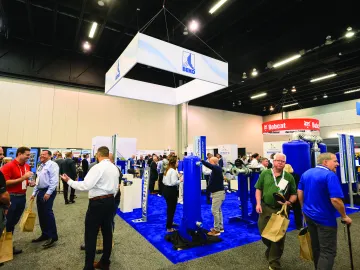
Compressed Air Best Practices® Magazine has conducted its first-ever reader survey for this 20th anniversary issue, and the results show a positive outlook for compressed air system sales in the near future.

By Troy Dreier, Senior Editor, Compressed Air Best Practices® Magazine

In this interview, FS-Elliott CEO Everson De Campos discusses the company’s strategic direction, emphasizing innovation, sustainability and advanced manufacturing in centrifugal air compressor technology. He highlights investments in global production, engineered-to-order solutions and new product development, including the Polaris platform, as well as growing demand for oil-free compressed air in critical industries. The conversation also explores lifecycle service innovations, digital monitoring approaches and the importance of workforce and channel partner training in meeting increasingly complex customer requirements.
By Michael Dolan, Director of Sales and Marketing, South-Tek Systems
What started as a cost concern quickly exposed deeper risks tied to supply reliability, contract constraints and production downtime. Facing a tight deadline, the electronics manufacturing company executed a rapid transition to an on-site nitrogen system that reshaped how its operation is powered. The results reveal why more manufacturers are rethinking their dependence on delivered industrial gases.
By Chad Larrabee, Technical Editor, Compressed Air and Gas Institute
The Compressed Air and Gas Institute has released a Compressed Air Purity Guide to help industries achieve clean, dry compressed air and improve system reliability. The guide applies ISO 8573-1 to classify contaminants such as particles, water and oil, and defines purity levels for plant, instrument and process air. It also outlines key technologies like dryers and filtration systems to ensure optimal air quality and equipment protection.
By Troy Dreier, Senior Editor, Compressed Air Best Practices® Magazine

A modular nitrogen generation system integrated with compressed air infrastructure enabled on-site nitrogen production, reducing reliance on delivered CO₂ and improving process efficiency. Adjustable nitrogen purity levels (e.g., 99.99%) optimized flow rate and demand matching while maintaining product quality in brewing applications. The implementation demonstrates how scalable nitrogen generation technology can lower operating costs and support growth in small to mid-sized industrial operations.
A snack manufacturer, strengthened operational efficiency and product freshness by implementing onsite nitrogen generation at its Houston facility. By replacing delivered nitrogen with PSA-based systems from Liberty Systems, the company gained 24/7 supply reliability, reduced operating costs and improved sustainability performance. The investment supports scalable Modified Atmosphere Packaging (MAP), enhances business continuity and positions Dishaka for long-term growth in the competitive food manufacturing industry.
Compressed air boosters are engineered to amplify medium-pressure air (90–150 psig) to high-pressure ranges up to 435 psig (30 barg) using oil-free rotary screw technology, IE5 permanent magnet motors and advanced VSD+ drivetrains for improved turndown and energy efficiency. By combining Class 0 oil-free air quality, synchronous PM motor performance (up to 97% efficiency) and intelligent controls, next-generation booster systems deliver higher flow stability, reduced specific energy consumption and seamless integration into existing compressed air networks.
By Troy Dreier, Senior Editor, Compressed Air Best Practices® Magazine

Through detailed plant audits, load profiling and system standardization, a regional distributor helped a multi-plant food processor optimize its compressed air infrastructure using 200 hp lubricated VSD rotary screw compressors, 10,000 gallons of storage and properly specified food-grade lubricants. By focusing on correct sizing, temperature monitoring, contamination prevention and lifecycle maintenance practices in dusty environments, the installations delivered stable operating pressures, improved energy performance and scalable capacity for continued expansion.
By Cynthia Kuiper, Operations Director, VPInstruments
After a sudden air compressor failure exposed hidden inefficiencies, a furniture manufacturer launched a comprehensive compressed air system audit. Using advanced flow, pressure, dew point and energy monitoring, the assessment revealed aging equipment, piping restrictions and costly air leaks across the factory. A full system upgrade combined with continuous compressed air monitoring reduced energy consumption by 20%, improved reliability and delivered a two-year payback.
By Centrifugal Compressor Section, Compressed Air and Gas Institute
Centrifugal air compressors are widely used in industrial compressed air systems, yet misconceptions remain regarding capacity control, surge behavior, and operational complexity. This article provides a technical overview of modern centrifugal compressor design, explaining how inlet guide vanes, bypass controls, and microprocessor-based algorithms enable efficient operation across varying demand while mitigating surge. It clarifies proper application and sizing considerations to help engineers and plant operators make informed equipment decisions.