Industries

MSHA Regulations for Safe Compressed Air Operation

This article reviews key Mine Safety and Health Administration (MSHA) requirements affecting compressors, air receivers, pressure systems, piping, hoses and compressed air use. It also examines common field hazards, inspection and maintenance considerations, equipment safety requirements and worker training provisions. Practical examples illustrate how mine operators and compressed air professionals can identify potential hazards and improve safety while working within the applicable MSHA framework.

Understanding the ISA-7.0.01-1996 Instrument Air Standard

This article examines the ISA-7.0.01-1996 instrument air standard and its requirements for pressure dew point, particle size, oil content and contaminants. It explains how to select and size refrigerated and desiccant compressed air dryers, filtration systems and air compressors based on operating conditions and application requirements. The article also addresses dew point optimization, compressed air demand, system redundancy, maintenance and leak management, with practical examples from food packaging, oil refining and remote industrial applications.

Magnetic Pickups Reduce Compressed Air Demand at Automotive Plant

This article focuses on a project to replace vacuum cups with spring-return magnetic pickups for handling ferrous metal parts at an automobile assembly plant in Missouri. The application is most familiar in automotive stamping and body shop operations, but the lesson applies to any plant using vacuum cups to grab steel blanks, panels, brackets or formed parts. The original equipment in this case study used vacuum cups served by venturi devices.

20 Years of Case Studies: Plants Sharing Best Practices

For 20 years, Compressed Air Best Practices® Magazine has published articles focused on helping manufacturers reduce power demand, lower water consumption, and improve the performance of compressed air, cooling, blower and industrial vacuum systems. In this article, we highlight a sampling of those stories across the following industries: Plastics and Packaging Food and Beverage Automotive and Transportation Cement, Building Materials, and Mining Metals, Pulp, and Paper Pharmaceuticals, Healthcare, and Research Wastewater Treatment 

Sizing Compressed Air Piping to Manage Pressure, Flow and Velocity

Efficient compressed air distribution depends on proper piping design to balance flow, pressure and velocity. This article explains how modular aluminum piping systems improve performance by reducing friction, minimizing pressure drop and maintaining laminar flow. With smooth interiors, full-bore fittings and leak-free connections, these systems help lower energy consumption and extend equipment life. A real-world case study shows how an optimized design reduced material and installation costs while maintaining performance. The result is a more adaptable, efficient and reliable compressed air network for modern industrial facilities.

Compressed Air at a West Texas Silica Mine

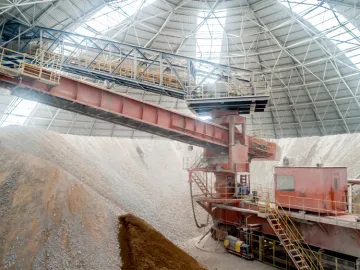
Compressed air system reliability relies on engineering expertise, environmental management and proactive maintenance. This article highlights how Brandon & Clark improved performance in two demanding applications: reducing failures in a dust-heavy silica mining operation through frequent preventive maintenance, and executing a complex disassembly and reassembly of a 300 hp air compressor in a confined university facility while preserving the OEM warranty. These cases show how tailored solutions and long-term service strategies enhance system reliability.

R&D Labs Shifting to N2 Generation

This article explores how on-site nitrogen generation, using PSA and membrane technologies, enables engineers to produce nitrogen on demand with greater control over purity, flow and pressure. It also highlights real-world applications and the operational benefits of improved uptime, reduced handling risks and lower total cost of ownership.

Leland Brewing Adopts Modular Nitrogen Generation

A modular nitrogen generation system integrated with compressed air infrastructure enabled on-site nitrogen production, reducing reliance on delivered CO₂ and improving process efficiency. Adjustable nitrogen purity levels (e.g., 99.99%) optimized flow rate and demand matching while maintaining product quality in brewing applications. The implementation demonstrates how scalable nitrogen generation technology can lower operating costs and support growth in small to mid-sized industrial operations.

Dishaka Strengthens Operational Efficiency with Onsite Nitrogen Generation

A snack manufacturer, strengthened operational efficiency and product freshness by implementing onsite nitrogen generation at its Houston facility. By replacing delivered nitrogen with PSA-based systems from Liberty Systems, the company gained 24/7 supply reliability, reduced operating costs and improved sustainability performance. The investment supports scalable Modified Atmosphere Packaging (MAP), enhances business continuity and positions Dishaka for long-term growth in the competitive food manufacturing industry.

Compressed Air and Vacuum System Purity for Food Packaging

This article examines strategies for achieving high-purity compressed air and vacuum systems in food processing and packaging facilities, emphasizing ISO 8573.1 quality classes, moisture control, particulate filtration, and food-grade lubricants. It also details best practices for system layout, centralized vacuum implementation, pressure dew point management, and preventive maintenance to reduce contamination risk, maintain equipment reliability, and ensure food safety compliance.

Variable-Speed Rotary Screw Air Compressors, Food-Grade Oil Selection and System Audits for Food Processing Facilities

Through detailed plant audits, load profiling and system standardization, a regional distributor helped a multi-plant food processor optimize its compressed air infrastructure using 200 hp lubricated VSD rotary screw compressors, 10,000 gallons of storage and properly specified food-grade lubricants. By focusing on correct sizing, temperature monitoring, contamination prevention and lifecycle maintenance practices in dusty environments, the installations delivered stable operating pressures, improved energy performance and scalable capacity for continued expansion.

Rotary Screw Booster Advances for Blow Molding

Compressed air boosters are engineered to amplify medium-pressure air (90–150 psig) to high-pressure ranges up to 435 psig (30 barg) using oil-free rotary screw technology, IE5 permanent magnet motors and advanced VSD+ drivetrains for improved turndown and energy efficiency. By combining Class 0 oil-free air quality, synchronous PM motor performance (up to 97% efficiency) and intelligent controls, next-generation booster systems deliver higher flow stability, reduced specific energy consumption and seamless integration into existing compressed air networks.

Renew Energy Partners Fixes Variable Demand on a Large Campus

An aerospace manufacturer worked with Renew Energy Partners to address energy waste caused by variable compressed air demand across a 30-building campus. By upgrading to a variable-speed drive compressor, repairing leaks, and improving air drying under an energy-as-a-service model, the project reduced energy use by more than 270,000 kWh annually while supporting long-term decarbonization goals.

Hyster-Yale Sustainability Recognized by North Carolina DEQ

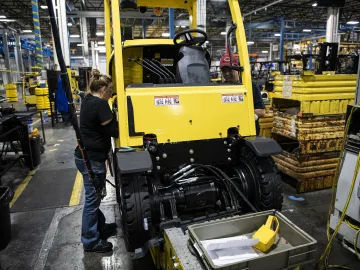
Hyster-Yale’s Greenville, North Carolina, plant reduced compressed air waste through employee-driven leak detection and system optimization, achieving $177,000 in annual energy savings. The initiative also avoided 858 tons of CO2 emissions and earned the facility Environmental Steward recognition from the North Carolina Department of Environmental Quality.

Advanced Compressor Technologies Solves Oversupply Problem

A Southern Indiana office furniture plant was wasting hundreds of dollars per day because its oversized VSD air compressor could not turn down low enough to match reduced demand after a shift to metal fabrication. To avoid drive faults, the plant vented compressed air to create false load. The audit revealed 300 cfm of wasted air—about $400 per day—and led to a redesigned system using a fixed-speed compressor for base load and a VSD unit for trim. The new configuration eliminated artificial demand and cut compressed air energy use in half, setting the stage for further savings through advanced sequencing, storage, and demand control.

Maple Leaf Foods Saves with Compressed Air and Heat Recovery Upgrade

One existing air compressor was a rental and not fully integrated into our compressed air system. We upgraded the desiccant compressed air dryer to improve operational efficiency, reduce energy consumption and save on the combined cfm. We save close to 900,000 kWh of electricity, and about 704 cfm every weekday.

The Importance of Compressed Air Quality in Nitrogen Generation Systems for Food Packaging

Modified Atmosphere Packaging alters the gas environment inside food and beverage packaging to maintain product freshness and slow degradation and fouling processes. The exact gas mixture used needs to be tailored to the product and can vary significantly. For many products, nitrogen gas is part of the packaging mixture due to its inert nature. 

ADG Concepts Solves Years of Piping Problems for Frozen Foods Plant

They got to a point where every time they added a new piece of equipment, it did not eliminate their rental, nor did it eliminate the water problems, the leaks and everything else they were experiencing. The system had issues that adding more equipment simply could not fix.

Meeting ISO 8573-1 Compressed Air Quality Specifications

The ISO 8573-1 was developed to provide standardized classes for compressed air purity in terms of particles, water and oil to drive the planning and design of compressed air systems in order to deliver the quality desired or required. This article explores why testing compressed air quality is as essential as choosing the right filtration, discusses real-world experiences, illustrates the risks of assuming things are right and explains the value of compressed air measurement. 

Air Compressor Design Considerations for a Successful Compressed Gas Mixing Project

Compressed Gas Mixing provides uniform mixing of water or wastewater tank contents by firing programmed, short-duration, high-intensity bursts of compressed air through engineered nozzles located near the tank floor. Mixing parameters – including pressure, sequence, duration and frequency – may be adjusted, either through operator input or automatic process feedback, to optimize power use and deliver ideally mixed conditions. 

Danmar Industries Custom Engineers for Oil and Gas

The items included three 550 horsepower (hp), oil-flooded, water-cooled, single-stage air compressors with inlet valve modulation capable of providing 1,540 scfm at 165 psi (11.4 bar), two heatless desiccant, 3,138 cfm, 165 psi (11.4 bar) compressed air dryers, and two nitrogen generators for the main station, as well as two smaller air compressors and heatless desiccant compressed air dryers for each of three smaller facilities. Air compressor packages typically meet API 619, but the customer did not request that in this case. The motors, however, need to meet API 547. Air compressor system piping needed to be carbon steel built to ASME B31.3. 

Blue Mountain Reins in a Sprawling Compressed Air System

The plant was intermittently operating a staggering 11 air compressors scattered across its facility. Its system was a patchwork of different air compressor sizes and technologies, including two 25 hp fixed-speed rotary screw air compressors, one 30 hp fixed-speed rotary screw air compressor and one 100 hp fixed-speed rotary screw air compressor as its primary air compressors. It also kept several 15 to 50 hp reciprocating air compressors on standby, turning to them when primary units were down for maintenance. 

Kirsh Foundry Drives Energy Efficiency with Compressed Air Optimization

The energy savings amounted to 550,873.5 kWh per year, resulting in a reduction of \$49,579 in energy costs annually. Additionally, nitrogen savings were significant, with annual expenses dropping by \$8,602 due to the installation of the on-site nitrogen generator. Overall, the project achieved total annual savings of \$58,181, with implementation costs of \$74,676 and an impressive payback period of just 1.28 years.

High-Altitude Mining and Steel Production in Peru

Before CAGI data sheets were created, air compressor distributors and their customers could only go by the manufacturers’ claims. He found there wasn’t any uniformity to the numbers manufacturers put out, so making comparisons was challenging. Some compressed air manufacturers measured capacity from the bare airend, while others measured from the air compressor’s outlet.

How Breweries Save By Switching to Nitrogen Gas

The brewing industry has long used carbon dioxide (CO2) in various brewing processes. Carbon dioxide has been the workhorse gas for the industry. It’s not only used to carbonate beer and give it fizz, but also to purge oxygen from tanks and lines to prevent spoilage and preserve freshness and flavor throughout the entire brewing process. 

Auto

Bulk

Food

Medical

Metals

Paper

Pharmaceutical

Plastics

Power

Printing

Transit

Wastewater