Industrial Utility Efficiency

Leaks

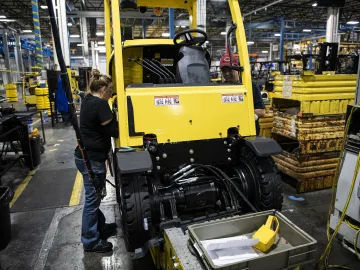
Hyster-Yale’s Greenville, North Carolina, plant reduced compressed air waste through employee-driven leak detection and system optimization, achieving $177,000 in annual energy savings. The initiative also avoided 858 tons of CO2 emissions and earned the facility Environmental Steward recognition from the North Carolina Department of Environmental Quality.
Thought Leaders on System Optimization Past & Future

We asked a hand-selected list of original equipment manufacturers, independent compressed air system sales and service companies, manufacturing plants and independent system auditors to share their thoughts, highlighting the changes they’ve seen over the past 20 years, then predicting what the next 20 years will bring.

Kirsh Foundry Drives Energy Efficiency with Compressed Air Optimization

The energy savings amounted to 550,873.5 kWh per year, resulting in a reduction of \$49,579 in energy costs annually. Additionally, nitrogen savings were significant, with annual expenses dropping by \$8,602 due to the installation of the on-site nitrogen generator. Overall, the project achieved total annual savings of \$58,181, with implementation costs of \$74,676 and an impressive payback period of just 1.28 years.

After the Energy Audit, What’s Next?

After an energy audit is performed, how much value has been created? The answer is zero. It's the work done after the audit that makes the difference between a binder on a shelf gathering dust and an executed energy conservation measure creating value. Your management wants results, not reports.

Leak Detection Leads to Energy Savings for Cabinet Manufacturing Plant

The plant’s compressed air system consisted of multiple air compressors from different manufacturers, with capacities ranging from 100 to 250-horsepower (hp), for a total system capacity of around 1,100-hp. The plant’s average compressed air demand was 2,300 cfm, with peaks reaching 3,500 cfm. System pressure fluctuated between 105 and 110 psi (7.2-7.6 bar).

Tools for Detecting Compressed Air Leaks

This article discusses methods and techniques to increase the efficiency of a compressed air installation in both the short and long term. Start by identifying and repairing compressed air leaks, which can result in a decrease in energy use and a savings in operating costs. There are various methods for detecting and quantifying leaks. Simple methods provide a rough indication of the leakage level.

Four Compressed Air Demand Reduction Projects

A large food manufacturing operation in the U.S. Midwest spends $529,000 annually on energy to operate the compressed air system.  The plant currently has two supply-side systems that operate and feed two different distribution networks at two different pressures. One compressed air system is at 115 psig (medium pressure system) and the low-pressure system is at 30 psig. The compressed air equipment for both systems is located in four areas throughout the facility.  

Beyond Leaks—Factory Continues Reducing Compressed Air Demand

A significant manufacturing operation, in the U.S. Midwest, had successfully deployed a compressed air leak management program. This on-going leak management program, along with tuning the air compressor control system, had delivered energy savings and a more reliable compressed air system.

Improve Process Efficiency and Reduce Energy Use with Compressed Air Monitoring

Without compressed air monitoring, up to 30% of the compressed air generated goes to waste. This waste occurs for several reasons, including leaks caused by failures at joints and tubes, exposure to vibration and normal component wear, and the suboptimization of machines and devices. Continuous monitoring capabilities allow operators to detect leaks and other anomalies in their early stages. By addressing pneumatic issues before they can grow, companies can reduce compressed air use by 20% to 30%.  

Best Practices for Acoustic Inspections in the Pulp and Paper Industry

Detecting Compressed Air Leaks Can Lead to Reduced Energy Waste, Boosted Productivity, and Improved Profits for Paper Mills Many manufacturing industries including food and beverage, chemical, mining and pulp and paper are heavily reliant on the use of compressed air within their production processes. Paper mills are major industrial facilities that rely on compressed air throughout the entire process as it is used to separate and clean the raw pulp fiber, operate pneumatic tools, and even control valves.