
The brewing industry has long used carbon dioxide (CO2) in various brewing processes. Carbon dioxide has been the workhorse gas for the industry. It’s not only used to carbonate beer and give it fizz, but also to purge oxygen from tanks and lines to prevent spoilage and preserve freshness and flavor throughout the entire brewing process.
About 30% of all carbon dioxide used at breweries is for carbonation. This is why breweries will always need carbon dioxide. However, the remaining 70% is up for debate.
Nitrogen gas (N2) can be used to replace much of the carbon dioxide at breweries. Storing and transferring beer from tank to tank uses a high volume of carbon dioxide. Other common uses include dry hopping, keg washing and canning. Breweries using carbon dioxide for these applications should strongly consider switching to nitrogen.
The Rise of Craft Brewing
In 1980, there were fewer than 100 breweries in the United States. In 1990, there were fewer than 300. Today, there are roughly 10,000.
Beer can be broadly classified into two fundamental types, ales and lagers. However, there are over 100 styles and sub-styles of beer around the world. They range from light ale to creamy stout. All beers are not created equally; they have nuances originating in their production. All of this makes this market interesting and lucrative. Large breweries dominated the market for decades, but the small craft brewery business has boomed. This allows the production of every kind of beer so every consumer can purchase the styles and flavor profiles they prefer.

A brewery’s size is based on how many barrels it sells per year. Smaller breweries might only sell 1,000 barrels. Many local breweries sell 5,000 to 10,000 barrels. Every state has large local breweries producing well over 20,000 barrels annually. The more barrels breweries make, the more carbon dioxide they consume. The more carbon dioxide they consume, the better the return on investment for a nitrogen generator. Carbon dioxide is sold in pounds, so it’s easy to total the number of pounds consumed.
Putting Old Wives’ Tales to Rest
For decades, brewers thought carbon dioxide was the only gas that could be used in brewing. This has been debunked, and nitrogen is now used in a myriad of brewery applications.
Conversations on nitrogen replacing carbon dioxide have taken place in earnest for the last five to ten years. Brewers and brewing associations now discuss the topic on a regular basis. Brewing is a large market with a diverse pool of owners. It takes time to undo years of old wives’ tales, anecdotes, rumors and myths about nitrogen use in brewing.
Nitrogen is known as the world’s safety blanket, but it is easy to understand why changes in this market are slow. Beer has been made for about 5,000 years! When considering replacing carbon dioxide with nitrogen, brewers have some major reservations. The switch absolutely cannot negatively affect the taste of the beer. Unacceptable levels of oxygen (O2) cannot be introduced into the beer. Cost is the strongest consideration: Buying green is great, but if it costs more companies will resist. Businesses need to be profitable.
Brewers Gain a Stable Supply at a Consistent Price
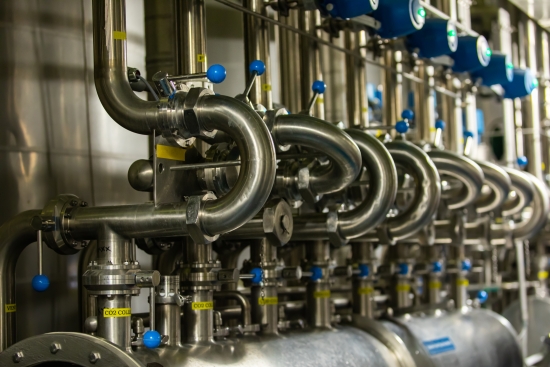
Nitrogen can function as a direct replacement for carbon dioxide in several brewery applications. Nitrogen is not as soluble in liquid as carbon dioxide. Oxygen will not dilute beer as previously expected.
Breweries making nitrogen instead of purchasing it alleviate three ongoing pain points plaguing owners. First, doing so reduces supply chain issues as there’s no dependency on a supplier. Second, inflation is a nonissue because the biggest cost of making nitrogen is electricity. Third, making nitrogen is sustainable and a green initiative. It is hard to find a more sustainable resource than nitrogen since it makes up 79% of the air we breathe!
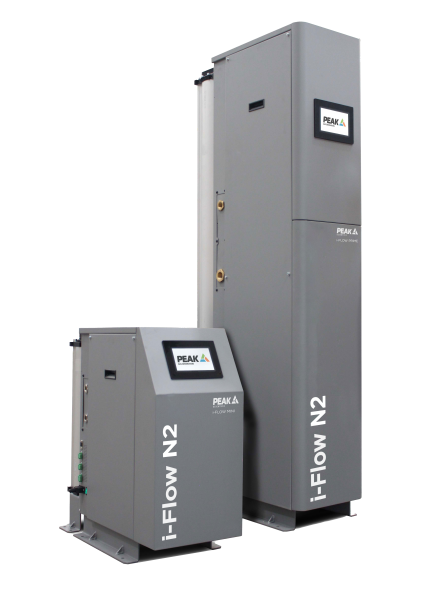
Why would a brewery have a gas company make carbon dioxide offsite, liquify the gas so it can be transported, deliver it in a large truck and put it in a carbon dioxide liquid storage tank, turn that liquid into a gas once again and pay for it all in perpetuity? A nitrogen generator can be installed in the brewery, letting it produce gas for significantly less cost.
Carbon dioxide prices experience wild swings depending on the location, periodic shortages and force majeure. Force majeure is a common contract clause freeing the supplier from obligation or liability when an event beyond their control occurs. This clause was invoked widely during the COVID-19 pandemic. Brewers were left with no carbon dioxide and couldn’t brew beer.
Recent shortages were related to contamination at one of the largest carbon dioxide producers located in Jackson Dome, MS. Shortages have significantly and negatively impacted several industries.
Nitrogen Applications in the Brewing Process
All brewers have their own recipes, thoughts, beliefs and methods. Each brewery has an opinion about how much carbon dioxide can be replaced by nitrogen.
I visited a large brewery in New England last year and a brewer said he thought he could replace 50% of carbon dioxide. This is still a large amount, and I wasn’t going to argue with a master!
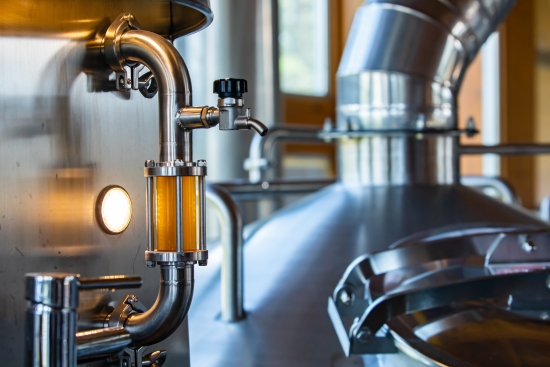
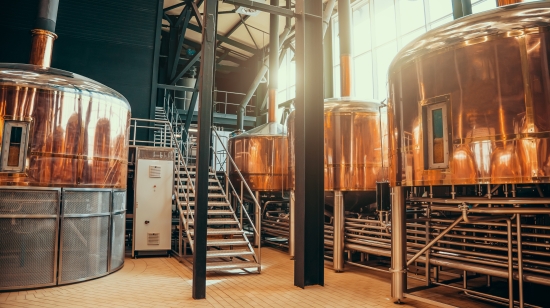
Breweries use stainless-steel tanks to store their product, and these are sized in brewer barrels (BBLs), which represent 31 gallons or two kegs. Tank sizes range from one to 10,000 BBL and higher. Activity starts in the fermentation tank. These stainless-steel vessels are specially designed for fermenting the wort. The wort is the sweet infusion of ground malt or other grain before fermentation. The tank must maintain the right temperature for fermentation. Tanks are made with food-grade materials to prevent contamination and corrosion allowing for the safe processing of wort and the development of flavors by microorganisms. Nitrogen can be used to purge oxygen from the headspace in beer tanks to minimize dissolved oxygen levels in the final product.
After fermentation is complete, the beer is moved to what are known as bright tanks. Bright tanks are bottom pressure-rated temperature-controlled tanks used to hold beer that is ready for packaging. The primary reason for this tank is to clarify and carbonate the beer before it is packaged. This is the last step in the brewing process. The term “bright” comes from the clear appearance of the beer after it settles in the tank. At this time, carbonation levels can be measured.
Nitrogen can be used in dry hopping. Dry hopping is a technique where hops are added to beer late in the process to add flavor and aroma. Nitrogen gas protects the beer from exposure to oxygen during the dry hopping process.
Canning is another process where nitrogen can be introduced rather than carbon dioxide. Nitrogen is used to purge oxygen from the empty cans. Nitrogen can also be used to purge the headspace of filled cans. This preserves the freshness, quality and taste of the beer by preventing oxidation. Some breweries introduce liquid nitrogen into the can before sealing to extend shelf life. About 30% of the total carbon dioxide consumption is essential for carbonation. Americans do not like their beer flat so this is not negotiable!
Nitrogen Doesn’t Negatively Impact Taste
For decades, the idea of using nitrogen instead of carbon dioxide caused brewers to become anxious. Brewers wanted to know the parts per billion of the oxygen coming from the nitrogen generator. Nitrogen purity is measured in parts per million, not parts per billion. This took some time to become accepted. Many breweries are now comfortable with 99.99% nitrogen purity. This varies depending on the brewer. Some find that a lower purity such as 95% can work, as well. It’s inexpensive to make nitrogen so using 99.99% has become the default purity. 99.99% is 100 parts per million. This seems like a lot of oxygen for a brewery, but it is not. Carbon dioxide contains oxygen, as well, hence the “oxide” in the name.
Brewers were certain the oxygen present in the nitrogen stream would foul their beer. Breweries measure their final product for dissolved oxygen (DO) levels, a sensitive and accurate way to ensure beer has the right amount of oxygen. This helps with consistency and quality. Most found nitrogen isn’t as soluble in liquids as initially thought. When using nitrogen and reading the DO levels there was no or minimal increase in the oxygen levels, and therefore no negative effect on the beer.

Lower Costs to Both the Environment and the Budget
Carbon dioxide is a greenhouse gas. It absorbs and radiates heat which contributes to the warming of the earth’s atmosphere. It’s widely recognized as the most anthropogenic or human-caused greenhouse gas. The greenhouse effect of trapping heat can result in severe weather events, rising sea levels and disruptions of ecosystems.
Let us now answer the question all breweries ask when considering this decision: Making nitrogen is much less expensive than buying carbon dioxide from a gas company and having it delivered. Breweries choosing delivery pay for each pound of carbon dioxide at varying levels of cost depending on the location and amount of gas used. In addition to being charged per pound, there are numerous surcharges including tank rental fees, delivery charges, hazmat fees, driver surcharges and environmental fees. Below is a basic example of a small brewery replacing 70% of its carbon dioxide.
Before
- 100,000 lbs. of carbon dioxide consumed per year
- $0.35 per pound (costs vary) = $35,000 for carbon dioxide
After
- 30,000 lbs. of carbon dioxide for carbonation and 70,000 lbs. replaced with nitrogen
- 70% replacement means a savings of $24,500 per year or just over $2,000 per month to apply to the purchase of a nitrogen generator
According to the Brewers Association, Congress is exploring providing access to credits and incentives to end-users such as breweries to procure and maintain carbon dioxide recapture and reuse equipment. That option is available for large breweries consuming millions of pounds of carbon dioxide. These breweries can afford the high cost of carbon dioxide reclamation equipment.
The better option for smaller breweries is switching to nitrogen. Congress could easily add nitrogen generation to the list of credits and incentives. If all breweries were made to replace carbon dioxide with nitrogen, the environment would benefit, as would breweries since their costs would go down. Talk about a win for all!
About the Author
Brett Maiorano has sold nitrogen generators for over 25 years. He grew up in Connecticut, and has lived in Raleigh, NC, for the last 33 years. Family, friends and sports take up most of his free time.
About PEAK Gas Generation
PEAK Gas Generation is a leading producer of on-demand gas generators for manufacturing and process industries requiring nitrogen. It uses the latest air separation and gas purification technologies to create bespoke high-flow and high-purity oxygen and nitrogen generation systems for industries such as aquaculture, food and beverage, electronics, metal fabrication, chemicals, pharmaceuticals and water treatment. For more information, visit https://www.peakgas.com.
To read similar Nitrogen Generation articles, visit https://www.airbestpractices.com/system-assessments/air-treatment-n2.
Visit our Webinar Archives to listen to expert presentations on Nitrogen Generation at https://www.airbestpractices.com/webinars.
