
Bi-State Compressor Helps Food Processor Grow
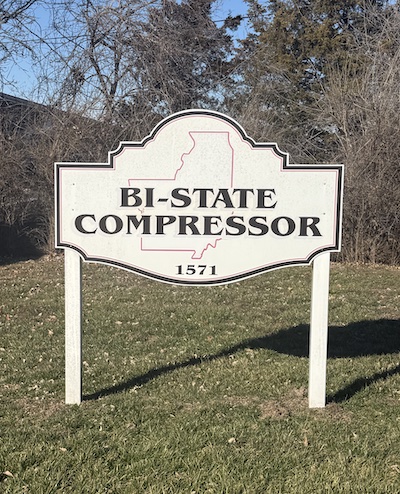
Bi-State Compressor is a compressed air dealership established in 1993 and based in Fenton, MO. It serves Missouri and Illinois, and is an authorized distributor for Quincy Compressor. Sales Manager Mike Sims has been in the industrial field for 39 years and has been with Bi-State Compressor for 30 years.
Sims has one cardinal rule for his sales team: “Be honest. Don't try to trick anybody or throw numbers out that don't mean anything. Honesty is the biggest thing. Then, do what you say you're going to do. If you say you're going to look up information for a customer, don't have them call you back. You drive that train. I believe in always contacting the customer. Usually, if the customer's contacting you, it's not good – unless they're calling you to buy an air compressor.
“Get in there and see what's going on. Don’t only hang around when times are good. Be honest with the customer, tell them exactly what you're doing and stand by that.”
When it comes to helping a customer select air compressors, the distributor doesn’t do anything over the phone. Sims instructs his sales team to visit in person and understand the big picture. Even when the customer knows what they want, visiting the plant in person is essential. Does the customer have the sizing correct? Does the customer have filters, oil/water separators and good ventilation? Who’s installing the new equipment? Getting the big picture often shows issues the customer wasn’t aware of.
“A good piece of advice is to always be available and return your calls promptly. Don't make customers wait,” Sims said. “If you're not available, let somebody know you're not available.”
He tells his sales team never to sell a customer an air compressor when a simpler solution will fix the problem. “I've been to plants where I've taught people how to buy air compressors. I tell them, ‘You don't need an air compressor right now, let's try these other options.’ Man, you talk about winning a customer over. When they think they have to buy a new air compressor, and your audit finds a different solution, they’re a customer for life.”
“Mike Sims always looks out for his customers,” said Mike Mitra, Area Manager, Quincy Compressor. “He goes above and beyond so they can perform their work without wasting time and energy. He’s a solutions-based expert who succeeds by maintaining strong customer relationships and collaborating closely with vendors.”
Case Study: Food Processing
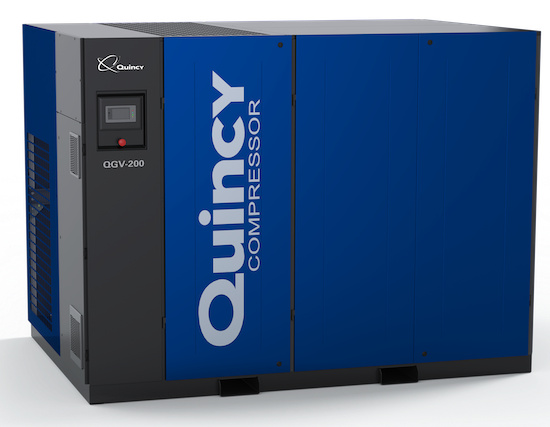
One of Bi-State Compressor’s biggest clients is a food processor with plants around the country. The distributor began working with the company in 1996, and has been with it as the company grew. The company’s preferred air compressor is a 200 horsepower (hp), lubricated, variable-speed drive, rotary screw using food-grade oil. It purchases two to four of this model air compressor per plant, depending on the size of the plant. The company also purchases 10,000 gallons of compressed air storage, compressed air dryers, filters and other essentials for each new plant. It sticks to the same compressed air system configuration, to keep ordering and maintenance simple.
The distributor first worked with the food manufacturer at a plant in Missouri. The plant already had fixed-speed air compressors used with flow controllers, but used variable-speed drives (VSDs) in other plant machinery, such as mixers and conveyors. The plant manager saw the value of VSDs. Looking at audit data from the distributor, he decided to replace his fixed-speed air compressors and flow controllers with VSD air compressors, saying he didn’t want to use air compressors with flow controllers any longer.
The plant purchased two lubricated, variable-speed drive, rotary screw air compressors using food-grade oil, as well as storage tanks and refrigerated compressed air dryers. The plant’s compressed air system drives all the food processing machinery used to create food and load it into bags. One 200 hp air compressor was all this plant needed; the second air compressor was a backup. The plant has been running VSDs since then, operating between 35% and 75% partial load. Its air compressors are never fully loaded.

Air Compressors in Dusty Settings
The plant is a dusty environment. As Sims says, “You just walk in and you’ve got food all over you.” Dusty environments aren’t kind to VSD air compressors, but the plant keeps its compressed air system in a separate room. That room still receives dust, but it has louvres to blow dusty air away.
The plant chose a noncycling refrigerated dryer, deciding the savings for a cycling refrigerated dryer wouldn’t be great enough. It also has wet and dry compressed air storage tanks offering around 6,000 gallons of storage. The plant handles its own maintenance, but calls Bi-State Compressor when special projects arise.
During Covid, Sims was able to handle a special service request from this company in a creative way that kept his client happy. A newly purchased air compressor ended up with several problems, due to temporary Covid staffing difficulties, and the plant demanded a new replacement air compressor. Instead, he shipped the plant a new motor, cooler and other replacement parts. A former diesel mechanic in the military, Sims, along with a lead service technician, personally fitted the parts into the air compressor. The air compressor manufacturer then extended the warranty by three more years. All this kept the plant satisfied without the expense of shipping a new replacement air compressor. To this date, the air compressor has performed perfectly with no issues.
The food manufacturer has grown with plants around the country, including the Midwest, South and West Coast. It treats each new plant as a clone of the first, repeating a working model. All plants rely on the same 200 hp, lubricated, VSD, rotary screw air compressors.
“For all food manufacturers, you want to make sure you put food-grade oil in the air compressors, because standard fill in an air compressor is non-food grade. It's easy to miss, because you have to click separate boxes. If you ship an air compressor with non-food-grade oil and they turn it on, that's a major problem,” Sims said. “It's never happened to us. We’ve had new sales guys where we had to remind them, ‘You know that plant has food-grade oil, right?’ If we'd shipped it and they turned it on, we'd have to clean all the pipes, get the air compressor out, and redo the whole compressed air system. We'd have to change all the oil and filters. That's a major challenge, making sure you select the right oil.”
Food-grade oil is rated for 4,000 hours, while regular oil is rated for 8,000 hours or one year. Sims cautions against relying exclusively on manufacturer estimates, since each location has unique challenges.
“Manufacturers are changing their intervals on a lot of things. Oil filters used to be every 1,000 hours; now they're saying 2,000 to 4,000 hours,” Sims said. “It's like your car: It depends on what the environment is. How much heat is there? How much dust? There are a lot of factors involved. You can't say, ‘I can leave a filter for 1,000 hours’ in a dusty environment. It’s the same with coolers: You need to make sure the coolers stay clean.”
The plant’s maintenance team monitors air compressor performance daily. The normal temperature for these 200 hp air compressors is 190°F (88°C). If they measure temperature above 200°F (93°C), it’s a red flag that there’s a problem, such as being low on oil or having dirty coolers.
Case Study: Industrial Heating Systems
Another major client manufactures heating and heat recovery systems for industrial facilities. It’s based in the Midwest and has been a Bi-State Compressor client off and on since 1996. It operates two plants.
This company was small when it first purchased a few 25 hp air compressors from the distributor. The company then worked with a different distributor when it decided to purchase air compressors Bi-State Compressor no longer offered. Plant operators, however, were unhappy with the results. Looking for a new partner, they interviewed multiple distributors. Sims knew so much about the history of the plant, having worked with it before, he got the job soon after his interview.
The company’s business was increasing, so it needed more powerful air compressors to drive its processes. The distributor conducted a seven-day audit using a SCADAR system measuring amps and pressure at one-minute intervals or less. It found the plant needed one 75 hp air-cooled, lubricated rotary screw air compressor to drive its operations. The plant made the purchase and was able to get $5,000 in rebates from the local utility.
The plant wanted backup air compressors, as well. For that, it selected used air compressors, since they wouldn’t run as often. It purchased a used air compressor Bi-State Compressor had on hand, paying less than half the price of a new model. The distributor sources its used air compressors from a major retailer, buying them while they’re still in excellent condition. Sims has been told the retailer loses a large amount of money every minute its distribution system is down, so it replaces its air compressors with new models when they still have a lot of life expectancy left.
“They're not going to have any equipment in there that's 15 or 20 years old,” Sims said. “They just can't afford it. You walk into this distribution center, there are thousands of TVs in this place. And then you walk in the week after Christmas and they're all gone.”
The distributor sold the customer a used air compressor with only 60,000 hours on it. Sims estimates it’s good for another 60,000 hours or more. The distributor tests all used air compressors in-house before selling them, and instructs customers to run used air compressors once a day each month, or while performing maintenance on the main air compressor, to keep them in good working order. Since winning this customer back, the distributor has been supplying it with new equipment and performing regular maintenance.
Low Plant Pressure Could Lead to an Upgrade
Five years back, the company built a smaller second plant 20 miles from the first. Process machinery punches holes in sheet metal, cuts it and bends it. The plant isn’t high volume, so it runs 25 hp, lubricated, air-cooled, rotary screw air compressors. What’s essential for this plant is having a clean production area where it can turn out quality systems.
Sims knows a customer is ready to grow when the plant manager calls and complains the air compressor isn’t working the way it used to.
“You visit the plant and ask, ‘Have you added anything on?’ They say yes and point to new process machinery taking 200 cfm. Well, the air compressor was maxed out before they put that line in,” Sims said.
“I had one customer that made silica. Its plant pressure dropped to 50 psi. It had a 150 hp air compressor. I did the audit and saw it needed 200 hp to raise the system air pressure from 50 psi back to 100 psi. We put a new 200 hp air compressor in there, and the plant ran fine. Those are the kind of things you'll see. If your pressure drops, it’s usually a malfunction with an air compressor, or typically it's a usage problem. Maybe someone opened a valve somewhere, or the plant has major leaks you don't know about. But typically, they add lines on, and everybody forgets about the air compressor.
“I enjoy helping customers with problems. When people come in with a problem and I show them how to fix it, there's a lot of enjoyment in that. I don't have to search for business anymore; it's been quite a while since I had to go looking. People will call me, and that's always good. Most, if not all, of my business is repeat customers and referrals.”

For more information, visit https://bistatecompressor.com.
To read articles on the Food and Beverage Industry, visit https://www.airbestpractices.com/industries/food.
For expert presentations on the Food and Beverage Industry, visit our Webinar Archive Section at https://www.airbestpractices.com/webinars.
