
Compressed Air Boosters for High-Pressure Applications: Oil-Free Rotary Screw Technology, IE5 PM Motors and VSD+ Efficiency
Compressed air boosters play a vital role in industrial processes where standard compressed air pressure is insufficient. Booster technology has seen significant advancements recently, driven by evolving industry requirements. This article explores the fundamentals of booster technology, new innovations and the benefits of adopting advanced high-pressure systems.
Understanding Booster Technology
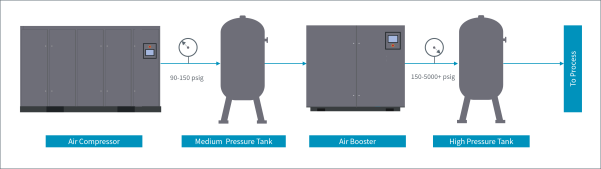
Air compressors are designed to take atmospheric air and compress it to a certain pressure. Standard air compressors deliver pressures between 90-150 psig (6.2-10.3 barg) with widely used rotary screw technology. Air boosters, on the other hand, are designed to take low-inlet-pressure compressed air and compress it to a higher pressure (over 150 psig/10.3 barg). Air compressors are a source of compressed air, while boosters are a pressure amplifier for existing compressed air.
Why Use Compressed Air Boosters?
High-pressure compressed air can be supplied either by installing a dedicated high-pressure air compressor system for an entire plant or by using a booster in combination with a medium-pressure compressed air network, depending on specific pressure requirements. Compared to a common or fully dedicated high-pressure compressed air system, a booster offers several distinct advantages:
- Efficiency: Oversizing a primary air compressor to achieve high pressure is inefficient and costly. Boosters allow targeted pressure increases only where needed.
- Flexibility: Boosters can be integrated into existing compressed air systems without major redesigns.
- Reliability: Dedicated boosters reduce strain on the main air compressor, extending equipment life.
Types of Air Boosters
Air boosters are classified by the air compression technology used.
- Piston Boosters: This is the most widely used technology in the industry, capable of delivering high pressures – typically ranging from 200-5,000 psig (13.8-344.7 barg).
- Rotary Screw Boosters: These are commonly used for medium-pressure applications. Recent innovation has extended this technology to high pressures, bringing the benefits of rotary screw technology, such as lower maintenance and improved efficiency.
As with air compressors, boosters can be categorized as oil-free or oil-lubricated:
- Oil-Free: Delivers high-pressure, oil-free compressed air with a continuous duty cycle. While oil is used for lubricating certain mechanical components, the air compression chamber is isolated from the oil chamber, ensuring no oil contaminates the compressed air.
- Oil-Lubricated: Provides a higher pressure range due to oil lubrication. This technology injects oil into the compressed air. This needs to be removed with a filtration system, resulting in regular maintenance.
Key Components Oil-Free Rotary Screw Boosters
Due to advancements in bottling and blow molding technology, pressure requirements have been optimized for some industrial applications. Previously, PET blowing applications required approximately 580 psig (40 barg) air pressure, but this has now been reduced to around 290-435 psig (20-30 barg) due to improvements in bottle design, materials and thickness. This optimization results in significant energy savings throughout the bottling process.
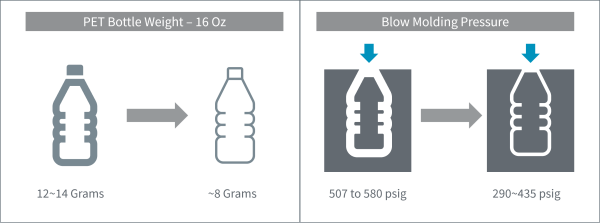
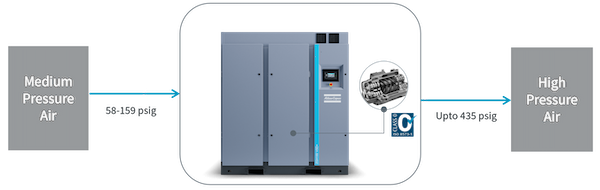
Rotary screw technology is commonly used in medium-pressure air requirements in the bottling industry. It provides advantages such as high efficiency, low vibration, better turndown and reduced maintenance. Thanks to recent developments, this technology has been extended to higher-pressure applications (up to 435 psig/30 barg), complementing industry requirements.
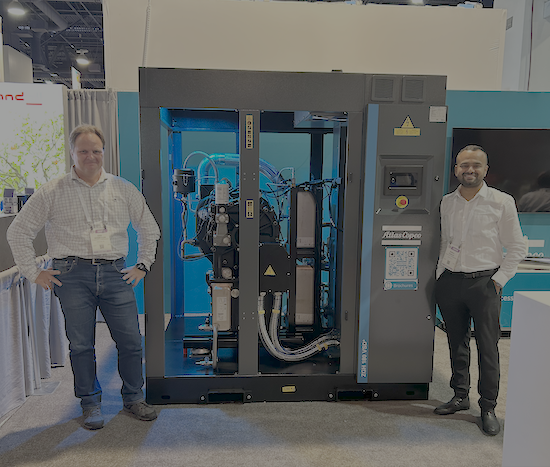
The new generation rotary screw booster is engineered to boost air to higher pressures, delivering higher flow rates and optimizing energy efficiency. A 100% oil-free, class-0 certified design (as it relates to oil content) ensures compressed air purity, as it doesn’t introduce additional oil, dust or water into the air compression chamber. Additionally, this design can handle a wider suction pressure range, making it easy to install in an existing plant setup with a compact footprint.
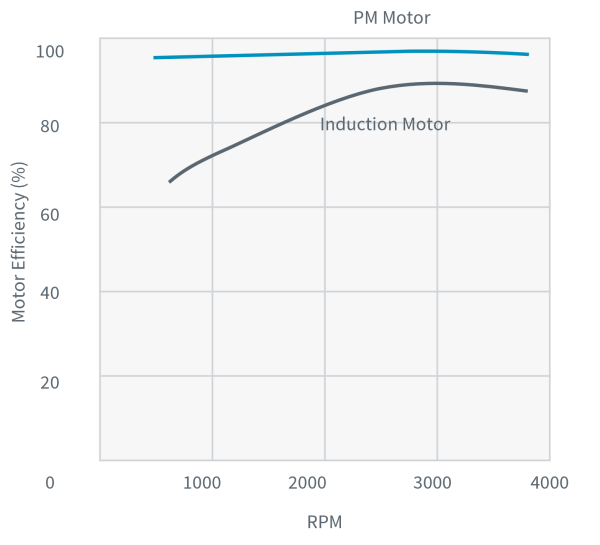
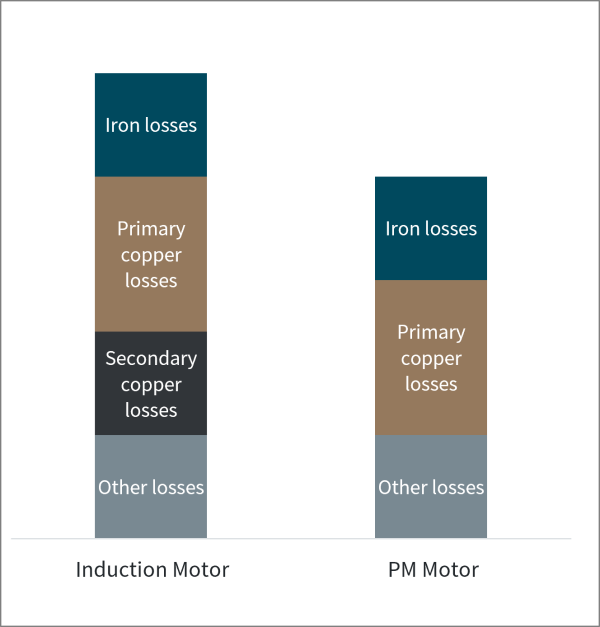
A specially developed IE5 permanent magnet (PM) motor provides the highest efficiency class. It can save up to 7% energy compared to a conventional induction motor. Permanent magnet motors run synchronously with the applied frequency, allowing the motor to operate at a speed set by the variable frequency drive (VFD), eliminating the intrinsic lag.
This motor technology offers high efficiency (up to 97%) with no current losses in the rotor, IP66 protection for challenging conditions, improved speed control as the rotations don’t slip or fluctuate with the load and an increased lifetime and low maintenance thanks to oil-lubricated bearings.
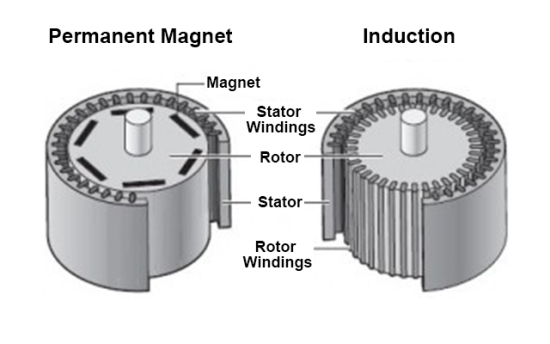
The key structural differences between a permanent magnet motor and an induction motor.
A variable speed drive (VSD) saves up to 35% energy compared to a fixed speed system by adjusting the motor speed to match the compressed air demand. Standard VSD air compressors and boosters accomplish this using induction motors coupled to the element.
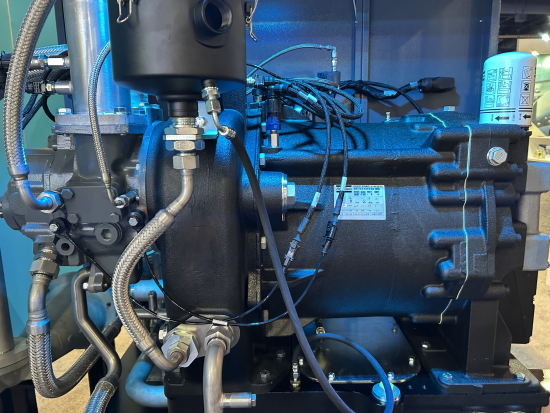
Newly developed air compressors known as “VSD+” are designed to save additional energy. They have PM motors coupled to rotary screw elements with an advanced transmission system, making them more energy efficient. This drivetrain provides a wider turndown range (20-100%) without compromising the efficiency of the system.
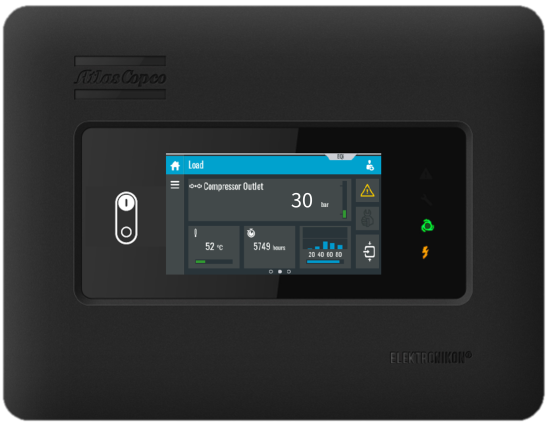
An advanced touch controller optimizes performance according to demand, improving energy efficiency with an advanced algorithm. With a remote monitoring system, users can remotely check the machine condition, performance parameters and maintenance schedule. This helps increase the uptime of the booster without impacting production.
Oil-free rotary screw booster technology marks a major advance in compressed air systems. By combining an oil-free design with the benefits of rotary screw technology – such as continuous-duty operation, low vibration and high energy efficiency – they deliver a reliable solution for high-pressure applications without compromising compressed air quality. This innovation expands the capabilities of rotary screw air compressors beyond medium pressure, making them a strong choice for industries seeking clean, efficient and sustainable performance.
About the Author
Manoj Purohit is a Product Marketing Manager at Atlas Copco Compressors, responsible for high-pressure air and gas compressor solutions. With hands-on experience in product development, he combines technical expertise with market strategy to support industries in adopting efficient, sustainable compressed air and gas solutions.
About Atlas Copco Group
Atlas Copco is a Swedish multinational company founded in 1873, specializing in sustainable industrial solutions. It provides advanced technologies in compressed air systems, vacuum solutions, industrial tools and power equipment, serving customers in over 180 countries with a strong focus on innovation and energy efficiency. Atlas Copco’s compression solutions include a wide range of energy-efficient air and gas compressors, along with air treatment systems and gas generators serving various industries globally. For more information, visit https://www.atlascopco.com.
To read articles about Plastics Manufacturing, visit https://www.airbestpractices.com/industries/plastics.
For expert presentations on Plastics Manufacturing, visit our webinar archive section at https://www.airbestpractices.com/webinars.
