
06/17/2026
Martin Engineering launched a transformative digital system that unlocks opportunities to maximize the efficiency, reliability and performance of industrial air cannons. The N2® Air Cannon Intelligence (ACI) System gives operators of cement plants and other large-scale, high-temperature facilities unprecedented insight into how their air cannons are performing.
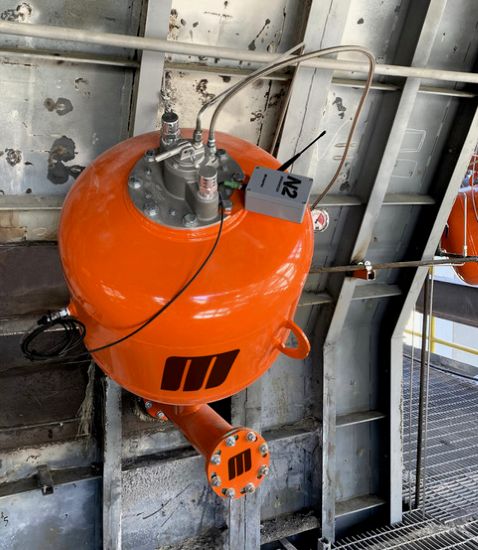
Part of the company’s N2 Enhanced remote monitoring portfolio, ACI represents the biggest technological advancement since air cannons were first introduced by Martin Engineering over half a century ago to improve material flow through raw mills, preheaters, kiln feeds, coolers, silos, chutes and other process vessels.
Developed at Martin’s Center for Innovation in Neponset, IL, N2 ACI has been refined during two years of real-world trials with leading cement producers in the U.S., as well as Brazil, France, Turkey and the U.K. These test installations have helped the company’s R&D team to fine-tune the platform’s monitoring algorithms, ensuring usability and demonstrable operational benefits in the most demanding industrial settings.
In major bulk processing plants, arrays of air cannons provide carefully sequenced blasts of compressed air to dislodge material clinging to the inner walls of process vessels – especially important for fine, sticky, moisture-rich feedstocks and fuels. Industrial operations like cement plants can have well over a hundred cannons throughout the process. But the enclosed nature of such vessels means, in the past, it has been virtually impossible to know if air cannons are performing as expected to keep the inner walls clear of buildups, unless each is inspected manually during a full plant shutdown.
Now with N2 ACI, operators have access to continuous monitoring and detailed performance analytics through a secure web-based dashboard and mobile interface. Fitted to each air cannon on a plant, the ACI sensor measures firing characteristics from which underlying problems can be diagnosed. This means maintenance issues can be fixed before they result in unscheduled downtime, and air cannon arrays can be modified for optimum performance.
“Air cannons have been around for more than 50 years, but until now there has been no reliable way for plant operators to understand how effectively they are actually performing as a sequence,” said Brad Pronschinske, Global Air Cannon Product Manager, Martin Engineering. “With ACI, we’re not just trying to tell plant operators whether a cannon fired or not. We’re helping them operate more efficiently by interpreting data from the sensors so they can improve system performance by adjusting firing sequences and improving installation positioning, as well as better manage preventive maintenance. Potential problems can be identified earlier, reducing unnecessary downtime and helping maintenance teams make smart decisions to optimize their systems.”
Traditional air cannon inspection methods often require maintenance personnel to manually trigger systems while visually observing pressure gauges. However, partial nozzle blockages and performance degradation can go unnoticed for long periods, resulting in reduced effectiveness, excessive compressed air and energy consumption and increased risk of production interruptions.
Customer trials have also demonstrated important safety benefits. By reducing the need for manual inspections and emergency cleanout procedures, the system helps minimize worker exposure to hazardous environments, confined spaces and high-temperature process areas. Reports from customer evaluations also highlighted reductions in manual water jetting, fewer emergency interventions and improved understanding of when maintenance is genuinely required.
The system operates through wireless battery-powered nodes mounted directly to air cannons, communicating via long-range radio frequency to a single cellular gateway capable of supporting more than 1,000 sensors across a site. Because ACI operates independently of plant wi-fi or control networks, installation can typically be completed without requiring a plant shutdown.
Martin designed the platform to support long-term reliability and optimization strategies by maintaining detailed historical records for every monitored cannon, including service events, firing trends and component performance data.
“Many customers simply don’t have the time or resources to continuously monitor air cannon performance. ACI gives them actionable information automatically, helping maintenance teams focus attention where it’s actually needed to keep critical material flow systems operating reliably,” said Pronschinske. “The technology helps facilities operate more reliably and efficiently, while reducing wasted labor, compressed air consumption and unnecessary wear on critical equipment across demanding bulk material handling applications.”
The N2® ACI System will be introduced throughout the Martin network over the coming months and years, with further installations already underway.
About Martin Engineering
For over 80 years, Martin Engineering has designed, manufactured and installed innovative products that make the world’s foundation industries cleaner, safer and more productive. Based in the U.S., the privately owned company has drawn on its unrivalled experience and expertise to help operations improve safety, enhance material flow, reduce spillage and dust and minimize downtime. With factory-owned facilities in 20 countries, on-the-ground presence in another 40 and a worldwide service partner network, the company has built an enviable reputation for high-performance products delivered with exceptional technical service and support. For more information, visit https://www.martin-eng.com.
