A Breakdown of the 5 Key Types of Compressed Air Dryers
If an efficient and reliable compressed air system is crucial to an industrial plant’s success, then a compressed air dryer is an essential component. Moisture in compressed air can cause corrosion, damage to equipment, compromised quality and expensive downtime. Choosing the right compressed air dryer protects the entire production system and delivers clean, dry air when it’s needed, while maximizing energy savings.
With a vast selection of compressed air dryer technologies and varying operating conditions, how do you determine which option works best for your plant?

A variable speed drive refrigerated compressed air dryer.
Dry Compressed Air Is Essential for Productive Plants
Why do we need to dry compressed air? All air contains some amount of water vapor. When air is compressed, the concentration of water vapor increases. As the air cools, the vapor condenses into liquid.
If the moisture in compressed air isn’t removed, it can create problems with your system, causing corrosion in piping and equipment, rust and damage to pneumatic tools and valves, contamination of end products and – in cold environments – even freezing.
This makes compressed air dryers essential, not just to protect your equipment, but also to meet industry standards like ISO 8573-1 purity classes, which creates a way to specify compressed air quality.
Understanding an Industrial Plant’s Dry Compressed Air Needs
Before choosing a compressed air dryer, it is important to look at the specific needs of your operation. The compressed air system of a food and beverage manufacturer will have different requirements than an electronics manufacturer or a pharmaceutical cleanroom. It is important to know the answers to key questions. What air quality level is required for your plant’s process? What is the required operating pressure and flow rate? What are the ambient and dryer inlet air temperatures in your plant? Is the compressed air dryer for a specific point-of-use application or a full plant system? Are there any space, power or environmental constraints?
Knowing the answers to these questions will help you to find a suitable compressed air dryer and help avoid over- or undersizing.
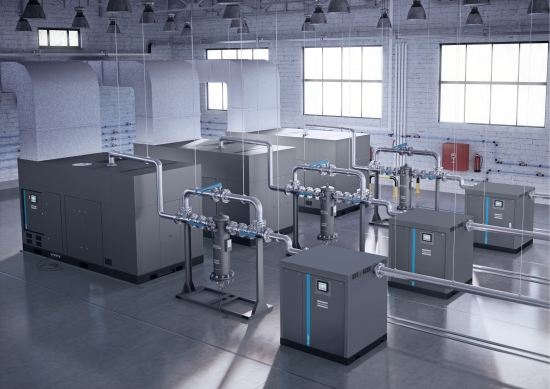
Variable speed drive refrigerated compressed air dryers with oil-free centrifugal air compressors.
The Five Types of Compressed Air Dryers
There are various types of compressed dryers, each with its own advantages, operating principles and ideal use cases.
Refrigerated Compressed Air Dryers. The most common compressed air dryers for general industrial applications are refrigerated. These compressed air dryers cool compressed air to around 35-40°F (1.5-4°C), causing water vapor to condense and drain away. The compressed air is then reheated to room temperature before exiting the refrigerated dryer.
Refrigerated compressed air dryers are available in non-cycling and cycling designs:
- Non-cycling refrigerated compressed air dryers maintain a constant cooling operation for consistent dew point, making them simple and reliable but less energy-efficient at partial loads.
- Cycling refrigerated compressed air dryers automatically adjust cooling operation based on demand, reducing energy consumption when air flow is lower.
For operations where inlet temperatures are higher, such as with oil-free piston compressors or in hot environments, high inlet temperature refrigerated compressed air dryers are designed with larger heat exchangers and aftercoolers to handle compressed air up to around 180°F (82°C) without a separate aftercooler.
Pros:
- Cost-effective and reliable
- Easy to install and maintain
- Suitable for ISO Class 4 air quality for moisture content
- Low energy consumption
Cons:
- Moisture risk in extreme conditions
Refrigerated compressed air dryers are best for: Workshops and garages, general manufacturing, food and beverage processing, woodworking, textile manufacturing, printing, agriculture, pharmaceutical packaging, electronic assembly, bottling and beverage distribution or any application not requiring ultra-dry air.
Desiccant Compressed Air Dryers (Adsorption Dryers). Desiccant compressed air dryers use hygroscopic material (often activated alumina or silica gel) to adsorb water vapor from the compressed air. They can achieve dew points as low as -40°F to -94°F (-40°C to -70°C), making them ideal for critical applications.
There are several subtypes of desiccant compressed air dryers including heatless regenerative compressed air dryers (the most common type), heated purge compressed air dryers, heated blower purge compressed air dryers and nonstandard desiccants which can achieve dew points well below the standard -40°F (-40°C).
Pros:
- Low dew points for moisture-sensitive environments
- Operate in cold or remote settings
Cons:
- Higher energy consumption due to purge loss
- Requires periodic replacement of desiccant
Desiccant compressed air dryers are best for pharmaceutical, electronics, food and beverage, aerospace and any process where moisture can damage products or processes.
Membrane Compressed Air Dryers. Membrane compressed air dryers use selective permeation to separate water vapor from compressed air. The compressed air passes through a membrane that allows only water vapor to escape.
Pros:
- Smaller, lightweight and quieter
- No moving parts or electrical components
- Ideal for point-of-use compressed air drying
Cons:
- Limited capacity
- Dew point suppression is lower compared to desiccant compressed air dryers
Membrane compressed air dryers are best for applications with small flow requirements, such as medical or laboratory applications.
Deliquescent Compressed Air Dryers. These compressed air dryers use a chemical agent that absorbs moisture and then gradually dissolves. These units are simple and often used in natural gas or remote pipeline installations. They require regular media replacement and offer limited control over dew point.
Pros:
- Low initial cost
- No electricity needed
- Simple design
- Good for low-demand, outdoor or seasonal use
Cons:
- Ongoing chemical cost
- Limited drying capability
- Variable performance
- Potential chemical handling issues
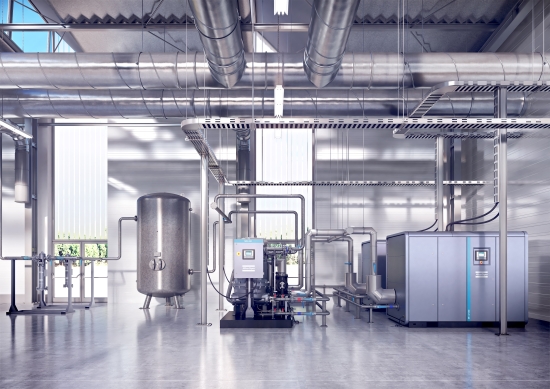
A heat of compression, rotary drum compressed air dryer and an oil-free rotary screw air compressor.
Heat of Compression (HOC) Dryers. Heat of compression dryers use the heat generated during air compression to regenerate their desiccant material, eliminating the need for external heaters or purge air. They are most effective when paired with oil-free rotary screw or centrifugal compressors that run continuously.
Pros:
- Energy efficient
- Continuous operation
- Low operating costs
- Environmentally friendly
Cons:
- Dependent on air compressor heat
- Higher upfront cost
- Limited to certain applications
- Requires a consistent inlet temperature
What to Know Before Selecting a Compressed Air Dryer
To help you choose the right compressed air dryer for your industrial operations, here are some key points to consider:
Dew Point Requirements: What level of dryness is needed in your compressed air? For general applications, a refrigerated compressed air dryer may be sufficient. For processes where even trace moisture is a risk, a desiccant compressed air dryer is the better choice.
Flow Rate and Sizing: Compressed air dryers must be sized correctly for your air compressor's output. Too small, and they won’t keep up. However, bigger is not always better. If they’re too large, they may result in unnecessary energy costs and poor performance.
Temperature Requirements: Both environmental and inlet temperatures impact a compressed air dryer’s performance. Some compressed air dryers struggle in hot, humid environments or in spaces that are not temperature-controlled. It’s important to choose a compressed air dryer rated for the conditions of your environment.
Pressure Drop: All compressed air dryers cause some pressure drop. Look for models that minimize this, as excessive pressure drop forces your air compressor to work harder, reducing efficiency.
Energy Efficiency and Lifecycle Cost: When looking at the cost of ownership of a compressed air dryer, it is important to consider not only the initial price but also the long-term cost. What will its energy use be? What is the maintenance schedule like? Desiccant compressed air dryers, for example, consume more energy than other compressed air dryers due to purging compressed air to regenerate the desiccant beds. Some models include energy-saving features such as dew point demand sensors, which pause the regeneration cycle while the desiccant compressed air dryer is maintaining the required dew point in order to minimize purge loss.
Maintenance Needs: When choosing a compressed air dryer, it’s important to learn how often it needs service and how easy it is to maintain it. Some compressed air dryers are almost maintenance-free, while others require regular part replacements or system checks.
What to Avoid When Selecting a Compressed Air Dryer
Avoid these common mistakes when selecting and installing a compressed air dryer:
- Improper Sizing: This can lead to inefficiency and moisture breakthrough.
- Skipping Pre-filtration: This will damage compressed air dryers and may reduce their effectiveness.
- Choosing the Wrong Compressed Air Dryer for Your Application: For example, don't use a refrigerated compressed air dryer where ultra-dry air is required.
- Ignoring Seasonal Variations: Be sure to consider the seasons if your compressed air system is outside. Air temperature and humidity can fluctuate dramatically.
- Focusing Only on the Purchase Price: Saving money upfront may cost more over time in energy use and maintenance.
Work With a Compressed Air Specialist
A compressed air system audit can help a plant figure out its needs more precisely and discover if there are opportunities for improvement. A trusted supplier will not only recommend the proper equipment, but also support the plant with installation, training and ongoing maintenance.
Look for a partner who understands your industry and offers a range of solutions, not just a one-size-fits-all product.

Jayme Leonard, Digital Marketing Specialist, Atlas Copco Compressors.
About the Author
Jayme Leonard is a marketing communications professional at Atlas Copco Compressors, specializing in strategic planning, graphic design, website management and social media. She has developed a wide range of materials including marketing plans, brochures, newsletters and digital content.
About Atlas Copco Group
Atlas Copco Group enables technology that transforms the future. The company innovates to develop products, services and solutions that are key to its customers’ success. Its four business areas offer compressed air and vacuum solutions, energy solutions, dewatering and industrial pumps, industrial power tools and assembly and machine vision solutions. For more information, visit https://www.atlascopcogroup.com/en.
To read similar Compressed Air Treatment articles, visit https://www.airbestpractices.com/technology/air-treatment.
Visit our Webinar Archives to listen to expert presentations on Compressed Air Treatment at https://www.airbestpractices.com/webinars.