
Choosing the right air compressor is important, but so is the system design, service provider and manufacturer
We are often asked, “Who makes the best air compressor?” While the question is straightforward, the answer is anything but. This common oversimplification has led countless clients down a path of unnecessary expense, costing some tens of thousands, others hundreds of thousands and, in some cases, millions each year. As an independent consultancy with 40 years of experience, Compressed Air Consultants sees the fixation on brands as economically risky. It's not only about who makes the equipment, but about how each piece of the system coalesces to support your business’s unique demands.
The truth is, an air compressor, no matter its renown, is merely one leg of a four-legged stool. To stay upright, to support your business effectively, it needs the stability provided by the other three legs: system design, service provider and manufacturer. Overlook one in favor of brand and you add risk.
Our company motto, "It's about money, not air" can serve as a starting point. It’s a reminder the end goal is not merely the generation of compressed air, but the generation of profit through the efficient and reliable operation of compressed air systems. Let’s dissect the four components that form the foundation of a compressed air system.
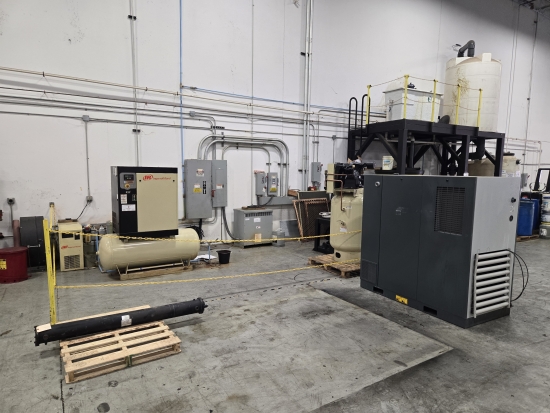
1. Product: Put Application Requirements Over Brand
The marketplace teems with various air compressor brands, each touting its superiority. However, the best air compressor isn't necessarily the one you may think is best, but the one where the entire value proposition aligns with the plant’s requirements. Choosing the right product for your facility means considering performance, energy efficiency and system compatibility.
There is often a trade-off between these requirements. Double-acting, lubricated, reciprocating air compressors may be a strong fit for high-demand applications, but they have higher oil carryover, cost considerably more and their maintenance requirements can be greater than other machines. Yet, at the same time, their overall efficiency at full and part load is best in class.
No single company makes best-in-class products for each and every size and style of air compressor. For nearly every type there are multiple vendors that can meet application requirements. When purchasing air compressors, optimizing capital spend comes down to keeping application requirements generic while allowing each vendor to identify the specific gains provided by their design and the value each provides to the plant.
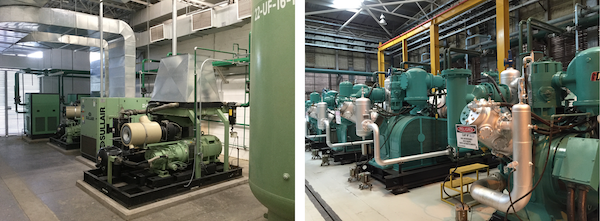
2. System Design: Customization Is Key
An air compressor is only as good as the system it’s part of. A well-designed system is tailored to your plant, taking into account the compressed air demand profile, the environmental conditions and future scalability.
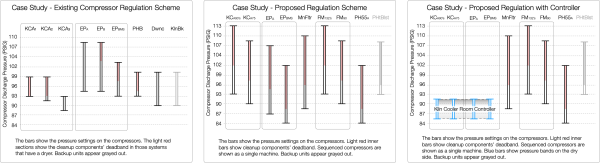
Whether creating a new compressed air system or a retrofit, work with an experienced system designer who is equipped with all the necessary data. For most plants, the design will consider compressed air supply, distribution and demand elements still to come. The air compressor control strategy has a greater impact on operating costs than the air compressor does, so pay close attention to the control strategy!
As an example, an air compressor company realized a customer’s request for bid likely was based on an expensive assumption. Plant pressure was 115 psig (8 barg) and no one in purchasing or maintenance knew why. Instead of bidding the job, the air compressor company recommended a system audit. The audit uncovered a single application that required less than 10 cfm at 100 psig (7 barg), while all other applications required 90 psig (6 barg). The customer decided to install a dedicated air compressor for the 100 psig (7 barg) application, then design the rest of the system for 90 psig (6 barg), saving capital and improving overall system efficiency.
New air compressors need to be integrated with other system air compressors and components. The system should include open protocols for external controllers and SCADA communications. True, this is an issue for both air compressors and controllers, but it often has a greater effect in the system's overall efficiency than the intrinsic efficiency of a new air compressor. Over the years, we have encountered multiple installations where an air compressor controller would not support VSD air compressors, yet the system included a VSD air compressor. Typically, this air compressor would run at minimum load or in load/unload mode or, in some cases, fully loaded, which is far from their maximum efficiency.
VSD air compressors add a new dimension to this discussion. They're often presented as a surefire way to improve system efficiency by minimizing part load energy waste. However, VSD technology is often misapplied, and their advantages can be lost if they are not properly integrated.
3. Service Provider: The Right Support
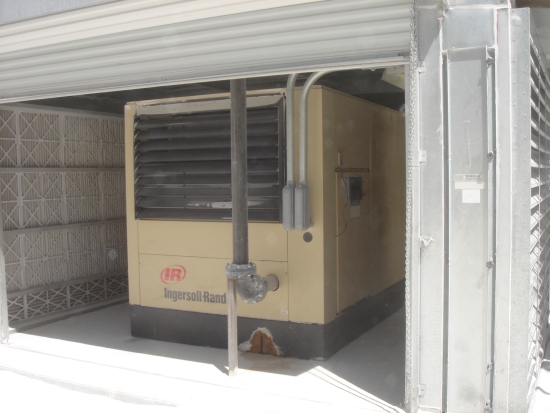
Maintenance can't be an afterthought. The best equipment can be rendered ineffective by poor service. A service provider's expertise, responsiveness and thorough understanding of your operations are crucial. Select a company that understands the equipment, has multiple service technicians trained to work on your specific air compressor and has the infrastructure to do all service work locally.
Every service provider has limits on the largest air compressor they can work on based on the disconnects they have in their shop. Consider the case of a 400-horsepower (hp) rotary screw air compressor experiencing a major airend failure. Some distributors don’t have the capacity to handle such repairs. If they repair the airend but can’t start the air compressor, you’ll only discover whether or not the repair was successful when the air compressor is reinstalled at your plant.
Plant service organizations with comprehensive infrastructure can test air compressors on the stand, identifying and correcting any issues before the unit is returned. While competence is crucial, it's equally important for customers to ensure their service provider has the necessary infrastructure.
Another example shows the value of having a trusting relationship with a service organization. One manufacturer experienced an airend failure, but didn’t have enough information to repair the unit under a warranty. The distributor had a long relationship with the plant, and knew the plant had been meticulous in maintaining the air compressor. The distributor negotiated an arrangement with the client where all parts and lubricants were discounted 20% until the plant had recouped the cost of the repair, as well as an extra 25% for its trouble. Creating this win-win situation cemented the trust between the distributor and plant.
The maintenance provider needs to understand the air compressor system management strategy, including pressure setpoints and control settings. Multiple groups within a plant should have a basic understanding of the system’s design. Create a design basis document and be sure it’s understood by all responsible parties.
4. Manufacturer: Partner in Success
The air compressor manufacturer's role extends beyond the sale. A true manufacturing partner supports the equipment throughout its lifecycle.
Customers turn to air compressor suppliers and maintenance providers first when experiencing issues or looking to improve their compressed air systems. Plants look for honest advice from organizations that have more compressed air equipment knowledge than they do. When problems arise, is there a sense of shared responsibility? The answer varies from brand to brand and distributor to distributor, but it's worth considering for any existing or potential supplier. Align with manufacturers that are invested in your success. They should provide ongoing training, updates and support to help you get the most out of your investment.
There is no single best air compressor on the market, but there is a solid formula to evaluate suppliers. For years of high reliability and lower costs, always consider application requirements, system design, the service provider and OEM support.
|
About Paul Edwards Edwards started with Ingersoll Rand in 1982 and worked in various field and office positions. He opened Compressed Air Consultants in 2003 as an independent audit organization with the tagline “It’s about money, not air.” Living up to that standard means the company’s advice often differs from traditional approaches, but the goal is to drive operating costs down and productivity up while spending as little capital as possible. |
 |
|
About Mauricio Uribe Uribe is a Mechanical Engineer with over 30 years of experience in compressed air systems. He worked for Ingersoll Rand and Bauer Compressors in several positions in the US and Latin America, and started auditing compressed air systems in 2003. During his career as an auditor, he has taken part in over 100 compressed air audits in world-class companies in a wide range of industries across five continents. Since 2022 he has been appointed as Head of European Operations for Compressed Air Consultants. |
 |
About Compressed Air Consultants
Compressed Air Consultants is an independent, 20-year-old auditing firm. It specializes in creating ROI projects through demand-side analysis and improved use of existing assets. In most of it audits, gains can be realized without purchasing new compressors. Its three principles (two in the United States and one in Europe) have 100 years of combined compressed air experience. Visit https://www.loweraircost.com.
To read similar articles on Air Compressor Technology, please visit
https://www.airbestpractices.com/technology.
Visit our Webinar Archives to listen to expert presentations on Air Compressor Technology at https://www.airbestpractices.com/webinars.
