
Centrifugal air compressors are used in many industries to provide clean, dry compressed air for various applications. Despite their wide use and general reliability, several myths and misconceptions about centrifugal air compressors have persisted over the years. In this article, we will demystify some of the most common myths about centrifugal air compressors. Specifically, we explain how centrifugal air compressors can handle varying air demands, debunk the belief that surge causes failures and remove the stigma that centrifugal technology is just too complicated. This article provides manufacturing plants with the facts they need to make informed decisions about using centrifugal air compressors.
Myth #1: Centrifugal Air Compressors Cannot Handle Varying Capacity Loads
A common myth about centrifugal air compressors is they are not suitable for systems with fluctuating demand. Positive displacement air compressors often use variable speed drives (VSDs) to adjust the speed of the air compressor to deliver a variable flow matching the changing demand. VSDs are not typically applied with dynamic (centrifugal) air compressors. Rather, modern centrifugal air compressors are designed with advanced control systems that enable them to handle varying capacity loads and fluctuating system demand. Most centrifugal air compressors use inlet guide vanes (IGV) to efficiently throttle the flow rate of the air entering the first stage of the air compressor.
By adjusting the position of the guide vanes, the air compressor maintains optimal efficiency at different flow rates. To provide additional control of the flow and pressure delivered to the compressed air system, there is typically a bypass or unloading valve.
To optimize these control systems, newer centrifugal air compressors are also equipped with microprocessor controllers that use advanced algorithms enabling the air compressors to adapt to changes in system demand in real time. These algorithms may use a variety of data inputs, including process variables, temperature and pressure, to optimize air compressor performance and meet the needs of the system.
By using these sophisticated control systems, centrifugal air compressors provide an effective turndown range that can effectively handle the fluctuating demands of many industrial processes, making them a reliable and versatile option for many applications.
Myth #2: Surges Cause Failures in Centrifugal Air Compressors
The performance of a centrifugal air compressor follows a curve where flow and pressure are inversely related. Whenever the discharge pressure exceeds the pressure on the performance curve for any given flow, the flow through the air compressor will stall and or reverse, resulting in surge. Surge presents as a loud noise, which can be alarming, but the main surge concerns are vibration – due to the turbulence created internally by the flow reversal – and a temperature rise through the machine, which can be significant. Occasional surge events, while not ideal, are not harmful to the air compressor, as this robust equipment is designed to handle such events without damage. However, frequent, prolonged surge events can be detrimental to the long-term reliability of the air compressor, also reducing the air compressor’s efficiency and increasing its energy consumption.
The causes of surge are several: operating the air compressor at a pressure higher than it can make for a given flow, high inlet air temperature, high cooling water temperature, attempting to throttle the machine too much or any combination of these. Realizing the many variables precipitating a surge condition, manufacturers designed their air compressors to include sophisticated controls that control and or avoid surge.
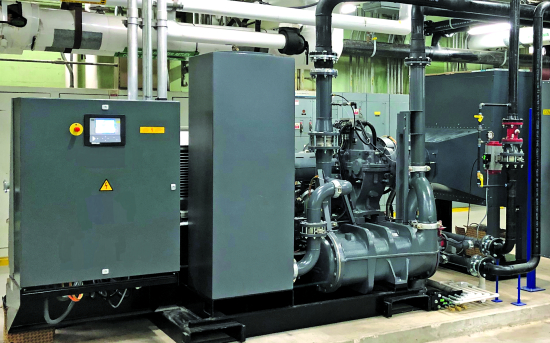
One of the biggest causes for surge is operating a centrifugal air compressor in a compressed air system where the air compressor is grossly oversized, leading it to operate deeply throttled. The more it is throttled, the closer the air compressor gets to its surge point. Having a properly sized air compressor and a controlled compressed air system are the most important factors in mitigating any potential conditions precipitating surge. The best way to ensure centrifugal air compressor selection and sizing decisions are based upon real data is to have a trained air compressor specialist perform a compressed air system audit and full system assessment before equipment purchase. Armed with this data, operators can select a properly-sized centrifugal air compressor equipped with advanced control systems to monitor the air compressor’s operating conditions and adjust its performance to prevent surge from occurring.
Performance adjustments are accomplished by changing the airflow into the first stage of the air compressor through the use of inlet guide vanes. Blow-off or unloading valves function to alleviate surge whenever system demand is below the turndown range of the inlet guide vanes. These control systems use algorithms taking into account a variety of factors, including inlet flow, discharge pressure, temperature and system demand, to make real-time air compressor adjustments maintaining stable air compressor operation and preventing conditions allowing surge to occur.
Myth #3: Centrifugal Air Compressors Are Complicated
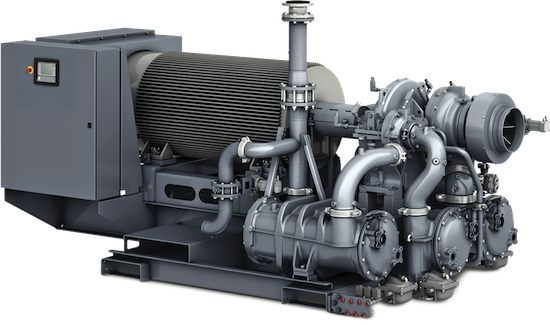
While centrifugal air compressors are highly engineered and robust pieces of equipment, they are not overly complicated. By design, centrifugal air compressors have few moving parts compared to other air compressor technologies. The key centrifugal components consist of a large drive gear, commonly referred to as a bull gear, that powers the bearing-mounted rotor assemblies for each stage. The rotor assemblies include the impellers generating the required flow and pressure.
Centrifugal air compressor components are typically easily disassembled and reassembled for maintenance and repair. With the proper equipment and training, maintenance personnel will find maintaining and operating centrifugal air compressors can be extremely simple. Additionally, centrifugal air compressors are designed with user-friendly microprocessor interfaces that allow operators to easily monitor and control the air compressors.
Conclusion
Centrifugal air compressors are versatile and reliable machines that can handle a wide range of applications. Despite common myths about capacity loads, surge events and complicated equipment, centrifugal air compressors are a great option for many compressed air systems. By understanding the capabilities and limitations of centrifugal air compressors, users can select the right centrifugal air compressor for their compressed air system and realize a low cost of ownership to produce compressed air for their application.
About the Centrifugal Compressor Section, Compressed Air and Gas Institute
The Compressed Air and Gas Institute (CAGI) is the united voice of the compressed air industry, serving as the unbiased authority on technical, educational, promotional and other matters that impact compressed air and gas equipment suppliers and their customers. CAGI educational resources include e-learning coursework, selection guides, videos and the Compressed Air & Gas Handbook.
The Centrifugal Compressor Section consists of the following member companies: Atlas Copco Compressors, FS-Elliott, Hanwha Power Systems, Ingersoll Rand and Sullair. For more information, visit https://www.cagi.org.
To read similar articles on Air Compressor Technology, please visit https://www.airbestpractices.com/technology.
Visit our Webinar Archives to listen to expert presentations on Air Compressor Technology at https://www.airbestpractices.com/webinars.
