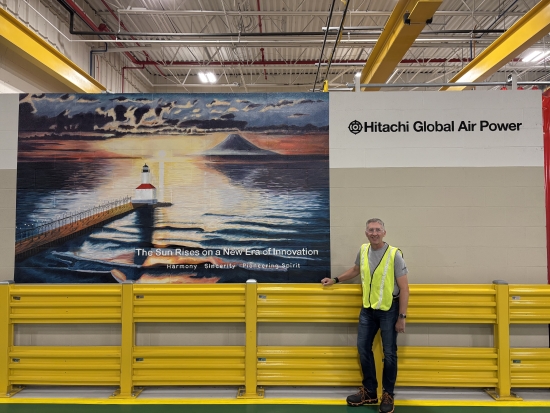
A mural at Hitachi Global Air Power depicts a lighthouse on Lake Michigan and Mount Fuji, representing the blending of two cultures.
Sullair began manufacturing air compressors in Michigan City, IN, in 1965, making this year the brand’s 60 anniversary. Hitachi purchased Sullair in 2017, and in 2023 it took on the name Hitachi Global Air Power. The new owner has brought fresh investment to the Sullair brand. Michigan City is the company’s hub for oil-flooded rotary screw air compressor design and manufacturing. It now fabricates many of its parts, thanks to a $30 million investment in 2021. Sullair has also benefited from the introduction of oil-free rotary screw technology from Japan. Compressed Air Best Practices® Magazine sat down with Hideki Fujimoto – who was named President and CEO of Hitachi Global Air Power effective April 1, 2025 – to learn more about his experience and plans for the U.S. market.
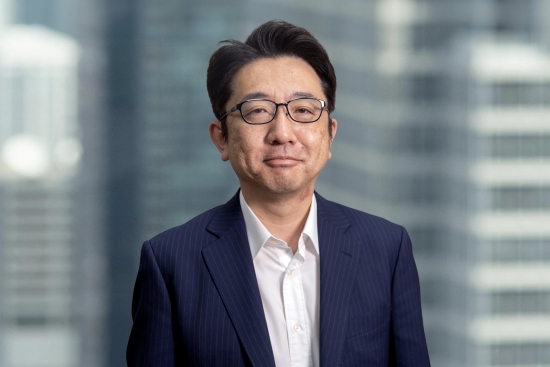
Hideki Fujimoto, President and CEO, Hitachi Global Air Power.
You worked your way up at Hitachi. What roles have you held?
I joined Hitachi in 2003 as an engineer. I was an oil-free screw air compressor engineer for more than 20 years. In 2017, we acquired Sullair. As the first expats for the post-merger integration, I came here with the previous President, Charlie Takeuchi. For two years, I was in the project management office, and then I moved to the engineering team. First, I was the airend director for Sullair, and then I moved to the new product development group. The last two years, I was Vice President of Hitachi Global Air Power Engineering.
Can you talk about your experiences with the DSP and SRL oil-free air compressor lines? How has that prepared you to take the Sullair brand into the oil-free, rotary screw air compressor business?
I was the DSP mechanical engineer for the Hitachi-branded DSP oil-free air compressor. In my role, I designed everything for it, including the starter box and the enclosure, everything. My first product was the DSP-90/110 Next Series. We’re still selling this DSP in the United States.
After that, I worked to develop the Hitachi oil-free business in the Chinese market. I set up production for our Hitachi Changshu factory. In 2011, we launched the oil-free DSP in China. Then, I worked with a Chinese joint venture company, and we produced OEM oil-flooded air compressors in China and Southeast Asia.
Finally, I came to Michigan City. I led the design and development of our first collaboration product for the Sullair brand, the DS Series of oil-free rotary screw air compressors. We launched the DS45-75 here. Last December, we launched a large oil-free air compressor, the DS280-450, as well. I also started TS series development because I was an airend engineer team director.
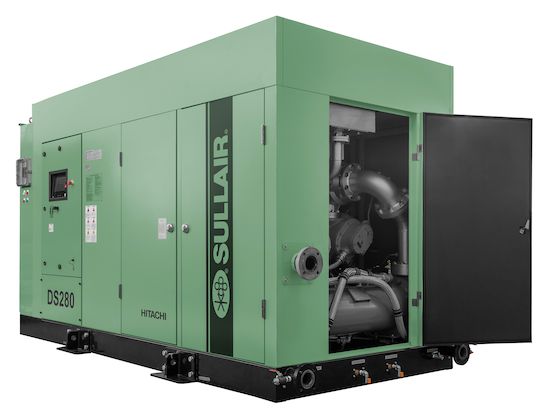
A Sullair DS280 oil-free rotary screw air compressor,
Can you describe how Hitachi Global Air Power is organized?
John Randall, previously the CEO of Sullair, is the president of Hitachi Industrial Equipment Systems. Hitachi Global Air Power is a division of Hitachi Industrial Equipment Systems. Hideharu “Henry” Tanaka and I lead together. Henry Tanaka is responsible for the legacy Hitachi businesses. The Hitachi factories and Hitachi brand air compressors are managed by Henry. It’s based in Japan, but also goes into Southeast Asia. Because we’re now one company, we're starting to ask, "How do we introduce products that are Hitachi-branded, made in Japan, into other channels?" Where there used to be a wall between the Hitachi and Sullair brands, now we’re asking, "What are the best opportunities for us to expand our business?" And all of that connects at John Randall.
John, Henry and I work closely together. The business in Japan has a significantly higher market share. We aspire to emulate its market share globally.
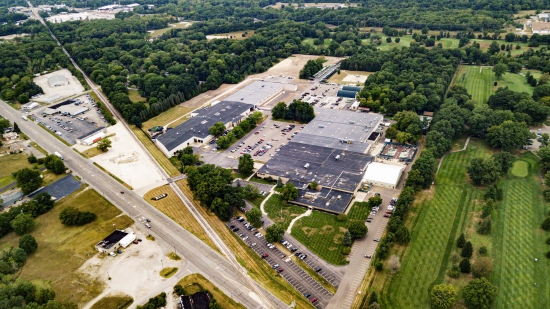
The Sullair campus in Michigan City, IN.
Give us a description of your business efforts in Europe
We see an opportunity for expanding our European presence. We’ll grow this market with mainly Sullair-branded products and also the oil-free line. That's why we invested in a venture company in U.K., not only focusing on the product itself. We’re trying to expand the air compressor application. That company's name is Innovatium, a liquefied air storage technology company. This is the new approach to the European market.
The Sullair brand is strong in the United States, LATAM and China. We’ll grow the Sullair brand distribution market. We try to avoid duplicating product development. That's why we first integrated the engineering divisions, so we have a speedy team. Here in the U.S., we have the Sullair engineering team, and in China, we have the Hitachi site engineering team and the Sullair team. We’re slowly integrating our sales teams, also.
How will the U.S. market change in the next five years?
Meeting market changes with new product development is important to us. That's why we launched the TS Series, our two-stage, larger oil-flooded air compressor last year. It’s also why we’re focusing on our new spiral valve technology, because Americans appreciate durability. The U.S. market is shifting to green products, which means combining strong energy efficiency with oil-free operation. That's why we're developing new oil-free air compressors. Also, we’re accelerating the localization of oil-free products in Michigan City. This is an extension of the DS45-75.
In the United States, a big part of your strategy is the spiral valve, which gives the customer more options: the spiral valve technology, plus VSD, plus fixed speed. How's that working for Sullair?
Of course, we need evaluation, but the United States market is unique. VSD and spiral valve sales are almost equal. Depending on the product, spiral valve sales can be much bigger than VSD sales. In Japan, VSD sales are nearly half the partial-load air compressor market, but here, spiral valves are used more often. It's a unique market. Only the Sullair brand provides electronic spiral valve technology to the market. That’s a strong point.
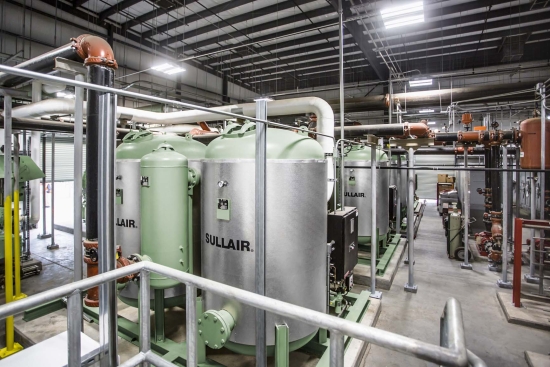
A heat of compression dryer installation.
What is Hitachi Global Air Power's philosophy for airend design?
In Japan, Hitachi focuses on oil-free airend design. Michigan City leads on oil-flooded airends, since we focus on oil-flooded air compressors in the U.S. We developed our original rotor profile here and we’re using CFD technology. The TS Series’ two-stage cooling method, for example, is important for airend performance. We have hundreds of simulations for TS air compressors. On the drivetrain, we’re working closely with Japan because HIES also produces a VSD.
How Engineers Become Top-Performing Salespeople – Webinar RecordingDownload the slides and watch the recording of the FREE webcast to learn:
Keynote Speaker, Mark Allen Roberts, CEO of OTB Solutions |
On the operations side, you made a record investment of $30 million in 2021 for an 80,000-square-foot fabrication shop. It was the largest investment in company history. What's next?
We brought fabrication in-house to better control pricing and ensure materials were made to our high standards. We’ll expand insourcing to the casting side. We started with 25 parts, and now we’re fabricating thousands of parts and components. Next, I'm considering air receiver insourcing.
What is the Sullair brand’s approach in North America to reaching and servicing the customer?
We acquired some distributors in the last few years. We’re focusing on both direct sales and distributor sales. The customer needs high-level maintenance choices. We focus on providing reliability and quality for the customer. That is the basic policy of the Sullair brand.
We expanded our direct sales and call it the Hitachi Air Center. We’ve created a one-company, direct sales group. But we try to expand because the voice of the customer (VOC) is important. Direct sales can understand VOC more easily. The simple answer is we’ll approach a market in the best way to protect our install base and grow it.
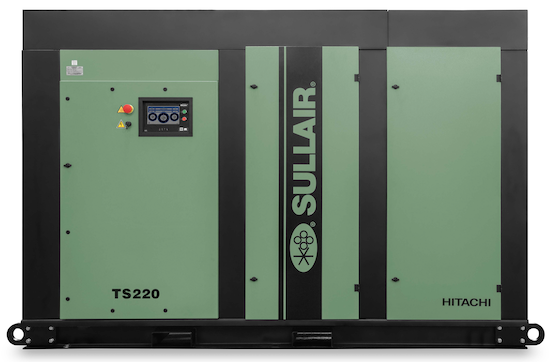
A TS series two-stage lubricated rotary screw air compressor.
How will new digital technologies contribute to Hitachi Global Air Power’s offerings?
We’re making significant investments in digital solutions – a space I find especially exciting because of the immense value digitally connected air compressors bring to manufacturing. Today, we offer Sullair AirLinx® connected services, and we’re building on that foundation by expanding our digital portfolio with more advanced, predictive capabilities by tapping into Hitachi’s deep expertise. The possibilities of digital connectivity are limitless, and we’re excited to bring even more smart, connected solutions to our customers.
We’re happy to invest in the air compressor business in North America. We were struggling to expand the North American market for a long time, but finally, we have a solid business here. We’ll continue to invest in the U.S. market.
Timeline: Major Moments from Sullair’s 60-Year Journey
1965 Company founders Don Hoodes, Borje Vagenius, CJ Joseph and Roger Gustafson sign a licensing agreement with Svenska Rotor Maskiner Aktiebolag (SRM) allowing the use of SRM rotary screw technology in air compressors.
1966 Sullair sells its first portable air compressor, a 150 cfm rotary screw air compressor powered by a Ford gasoline engine.
1969 The first employees move to 3700 East Michigan Boulevard, which remains the primary manufacturing campus.
1971 The company introduces industrial refrigeration compressors.
1973 The company begins in-house rotor manufacturing.
1975 The 24KT air compressor line is introduced. It includes a complete air treatment system with PureAire dryers and Sterling filters, 24KT lubricant and an industry-first 10-year warranty.
1977 The MCI factory expands to 300,000 square feet.
1978 Sullair Technology Subsidiary, a joint venture with SRM, is established in Stockholm.
1978 EPA-compliant Quiet Portable Compressors are introduced. Also, the 40 Series industrial air compressor, which goes up to 1,000 horsepower (hp) is introduced.
1979 The Sully 2-20 hp reciprocal air compressor is launched. It’s likely the first non-rotary-screw compressor in the Sullair portfolio. The company introduces DSC dry screw air compressors, using airends supplied by GHH, West Germany, and liquid ring vacuum pumps.
1981 The company begins trading on the New York Stock Exchange. Its trading symbol is SUL. The 3200 cfm Portable Compressor is introduced. It’s believed to be the world’s largest single-engine air compressor.
1982 Respirable air source, instrument air source and nitrogen replacement systems are introduced.
1985 Spiral valve technology is introduced to stationary products.
1986 Sullair discontinues direct sales operations and moves to independent distributors for stationary products.
1990 The company acquires Maco Meudon, which becomes Sullair Europe.
1992 The DS product line is launched
1993 The company achieves ISO 90001 certification.
2004 An IHI-Sullair joint venture is formed to produce centrifugal air compressors.
2017 The Sullair LS Series is launched. Also, the company is acquired by Hitachi. The official name is Sullair a Hitachi Group Company.
2018 Hitachi DSP and SRL air compressors are introduced to Sullair channels. Also, Michigan City renames 3700 East Michigan Boulevard to 1 Sullair Way.
2021 A factory expansion that includes an 80,000 square foot fabrication shop is completed. This $30 million capital expenditure is the largest in company history.
2023 The company changes its name to Hitachi Global Air Power.
2024 The TS190-260 is launched featuring two-stage performance.
2025 The company celebrates its 60th anniversary with a year of activities.
A Picnic 60 Years in the Making
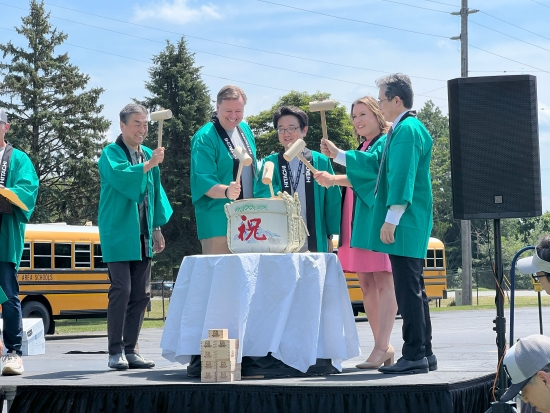
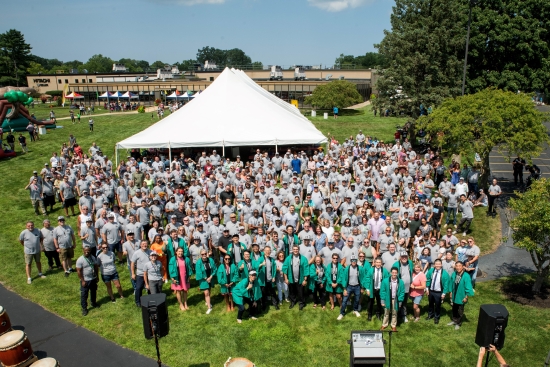
On August 12, 2025, Hitachi Global Air Power celebrated 60 years of manufacturing Sullair air compressors in Michigan City, IN, with a company picnic. It took place at the company’s Michigan City campus, and featured food, games, music and entertainment for employees and their families. Special guests included Masashi Mizobuchi, Consul-General of Japan in Chicago, and Tetsuro Mitani, Executive Director of the Japan Chamber of Commerce and Industry of Chicago. The company also sponsored a mural by artist Felix Maldonado, Jr. on multiple city-owned retaining walls to celebrate the region’s industrial heritage.

Manufacturing in the Midwest: A Conversation with Andy Fayyad
Sullair chose Michigan City, IN, for its home in 1965 because it was already an industrial city. Due to its proximity to shipping and steel, several manufacturers were based there. Sullair’s founder and three others came from Joy Global, which made heavy equipment for mining. They licensed rotary screw air compressor technology from SRM in Sweden, which owned the patent. On July 14, 1965, they signed a licensing agreement and started a company that’s still thriving today. We spoke to Andy Fayyad, Vice President, Operations, about how the company’s geography led to its success. Today, Michigan City has a population of 32,000, and Sullair is the largest manufacturing employer.
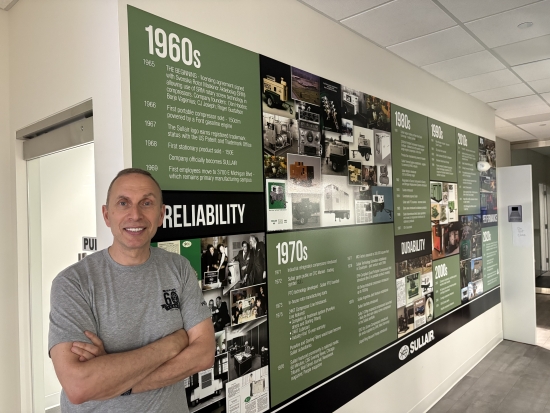
Andy Fayyad, Vice President, Operations, Hitachi Global Air Power.
How many people do you employ in Michigan City?
The total is just under 1,000, with around 80% in manufacturing and operating. It’s definitely a bit of a challenge to find the right resources that we need in the area. We're not Detroit. We're surrounded by a lot of tier one, tier two and OEM automotive suppliers. We're not Chicago. We're somewhere in the middle. The key is to hire individuals based on their behavior and if they have the right skill sets. You can train them, coach them, mentor them and mold them to become a valued asset to the company. To me, that's not a big deal. The key is finding the right attitude or the behavior that we can mold for the future.
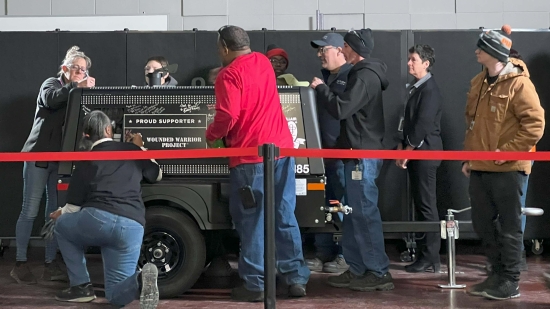
In January 2025, Hitachi Global Air Power donated a custom-designed 185 Series Tier 4 portable air compressor to the ARA Foundation’s charity auction. The company also made a separate $10,000 donation to Wounded Warrior Project®.
How do you develop home-grown talent?
We started the Compressed Air Academy at Michigan City High School less than 10 years ago. We asked how do we can get people interested in this type of work, starting early with the high schools, and start making it cool again to get their hands dirty? We’ve started hiring people who went through the Compressed Air Academy. We're restarting our intern program: A lot of our interns come from Purdue or Purdue Northwest. We've tried to reach out to some of the local community colleges and high schools to find people who are interested in working in this type of industry and recognizing that there are cool things you can do. This isn't a sleepy community. This summer, we had four students who were part of the intern programs in Operations.
There's a trade school called Ivy Tech. We’re going to be its preferred hiring company starting October of this year. We're working on several fronts to attract and develop talent.
Tell us about the Michigan City campus
We have three buildings. Building one is where we do portable and stationary machines. We assemble them. Building two is divided into two halves. One half is fabrication, where we make air compressor panels, control box panels, brackets, mounts and frames. The second half is the rotor and unit assembly, which is the brain of our machines. Building three, in a different location, is where we do value-added work: combining pieces of machinery, creating tank-mounted equipment, adding filters, that type of thing.
My operations department is close to 400 people, and our mission is simple: Build products safely, on time, with quality and under budget that meet and exceed customer expectations.
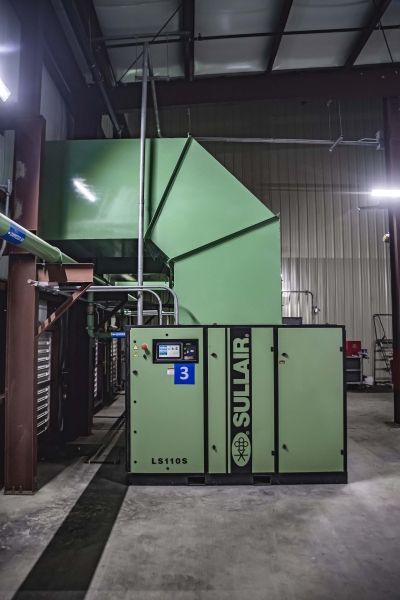
An LS110S single-stage lubricated rotary screw air compressor.
What plans does the company have for the Michigan City campus?
Building two is where a lot of the heavy-duty components are built, and we have been investing heavily there to upgrade our equipment. We have to invest around $7 million in it over the next three years. That means buying new machines or upgrading our existing machines that provide grinding, hard finishes, raw finishes and final finishes. We're favoring two different brands. One, Amada, a Japanese brand, is a partner of our parent company in Japan. That helps from a cost perspective and also from a knowledge base regarding service and warranty. The other is Holroyd, an English company Sullair has been using since 1970.
We’re on a transformation journey. My background is automotive. I spent 30 years at General Motors, so my experience is automotive-centric. I joined the company in November of last year. My goal and mission are to transform our operation to be like an automotive plant. We will be KPI-driven. We'll have standard work, structure, discipline and execution. We will modernize and grow. We won’t grow purely through investments, but through the labor force we have through training. To me, training is very important, as well as team and employee recognition. But I keep going back to engagement: Employee engagement is front and center in everything we do. An employee who cares will go not just the extra mile, but the extra 10 miles.
To read articles about Air Compressor Technology, visit https://www.airbestpractices.com/technology.
For expert presentations on Air Compressor Technology, visit our webinar archive section at https://www.airbestpractices.com/webinars.