
How intercooler design, materials and cooling methods influence the efficiency, reliability and performance of centrifugal air compressors
The process of creating compressed air produces significant amounts of heat that must be removed from the compressed air system. The amount of energy removed between stages has a direct result on the overall efficiency of the air compression process. A centrifugal compressor uses heat exchangers, called intercoolers, to cool the compressed air between stages of the air compressor.
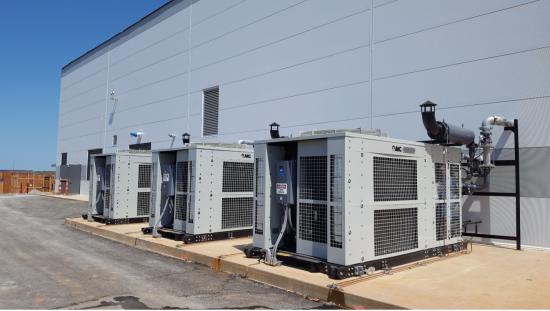
Heat exchangers simply transfer heat from one medium to another. In the case of a centrifugal air compressor, the intercoolers must transfer the heat of the compressed air to another fluid. This cooling fluid can be many different things, but often it is either water (sometimes a glycol/water mixture) or air. The cooling medium employed is used to classify centrifugal air compressors into two general types: air-cooled or water-cooled.
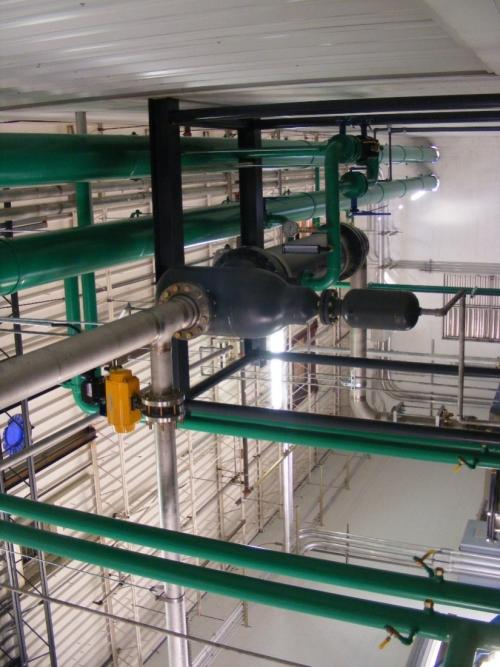
As the intercoolers sit between the air compressor stages, any pressure loss can reduce the efficiencies of later stages, reducing the overall efficiency of the air compressor. Air compressor manufacturers understand this, and centrifugal air compressor intercoolers and interstage piping are designed to be as efficient as possible.
The function of the intercooler is to bring two fluids, compressed air and a cooling medium, into close proximity to each other so they can transfer energy between themselves. The two fluids are kept separate from each other by a physical barrier. Careful design of this barrier is critical to cooler performance, as the amount of heat/energy transfer between the fluids across the barrier is predominantly governed by:
- Material thermal conductivity
- Material thickness
- Surface area
- Fluid velocity
Metal tubes make effective barriers for intercooler designs due to their strength and ease of manufacturing. Intercoolers found on a centrifugal air compressor package use tubes. These intercoolers are designed with tubes made with heat-conductive materials, made as thin as possible, and having maximal surface area.
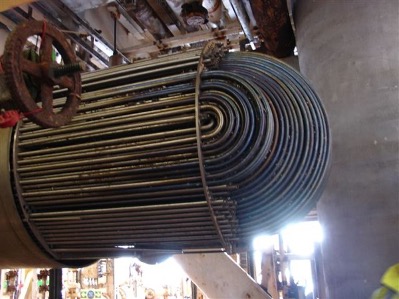
To maximize the efficiency of the intercooler, the selection of the tube material is critical. The thermal conductivity of the material is key to allowing maximum transfer of energy across the tube wall. The mechanical properties of the material are important, as stronger material allows for thinner tube walls, which allows better heat transfer. In addition to the thermal conductivity and mechanical properties of the tube material, corrosion resistance is also a critical factor in tube design. Care must be taken to ensure the material will not erode or corrode during the operational life of the air compressor. Air compressor intercoolers commonly use tubes made from copper, copper/nickel and stainless steel. More exotic materials can be used for special applications, such as titanium and duplex stainless steel.
Maximizing the surface area contact between the intercooler fluids will maximize heat transfer. The easiest way to increase the surface area available for heat transfer is to increase the tube length. However, this approach is limited by the physical constraints within the air compressor package. To get around this, heat exchangers use a group of tubes, or bundle of tubes, to increase the surface area. This bundle is connected with a tube sheet and head. The tube sheet mechanically connects the tubes while maintaining separation of the two fluids. The head connects the tubes into a singular volume. In water-cooled heat exchangers, a shell is used to contain both the tube bundle and the cooling water. The accompanying illustration shows the basic anatomy of a heat exchanger, including the shell, the head(s), the tube-sheets and the tubes.
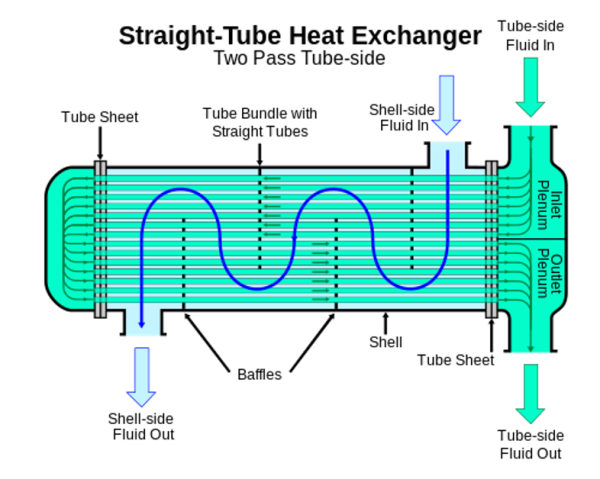
Another factor affecting intercooler efficiency is the velocity of the cooling fluid. Simply stated, more heat is transferred as the velocity of the cooling fluid increases. With a fixed tube cross-sectional area, fluid velocity is directly proportional to flow rate. The relationship of flow rate and velocity is critical in cooler design because if flow rates are too fast, the cooling fluid will prematurely wear away the thin tube materials, and if velocities are too slow, heat exchange decreases and any impurities that are in the cooling fluid will drop out and potentially clog smaller diameter tubes. To maintain the ideal zone of cooling fluid velocity and flow rate, intercoolers are designed to flow the cooling fluid through the cooler multiple times. This is accomplished either by simply bending the tubes into a U-shape or putting special channels in the cooler head. Often, centrifugal air compressors will be seen with two, four or even six-pass coolers.
In addition to intercoolers, some centrifugal air compressors also have aftercoolers. Aftercoolers are a heat exchanger that is located after the discharge of the final stage of compression. They are responsible for cooling the compressed air prior to delivering it into the compressed air system. They can be located alongside the intercoolers within the air compressor package, located in customer piping or even omitted entirely, depending on the needs of the compressed air system.
Another approach used to increase the surface area contact within the heat exchanger is reducing the diameter of the tubes. This allows more tubes to fit into the same cross-sectional area, increasing surface area while maintaining the overall shell diameter. Common tube diameters are 3/8-inch, ½-inch and 5/8-inch. However, there are practical limits to how small the tubes can be made. The smaller the tube diameter, the more susceptible the tubes are to fouling, and the harder they are to clean and maintain.
Most centrifugal air compressors have intercoolers between stages of compression. Proper design of the intercoolers is critical to the performance of the air compressor. Size, cost, materials of construction, efficiency, reliability and maintenance concerns are design variables that result in the wide variety of centrifugal intercoolers you’ll find in air compressor rooms throughout the world.
Some common types of intercoolers are:
Plate Fin. The plate fin cooler design is the most common cooler found on centrifugal air compressors. This cooler has water in the tubes and compressed air on the shell side. The tubes run through a series of plates mechanically connected to the tubes to form fins, similar to what you find on a car radiator. These fins increase the surface area for the air to transfer its heat. The water in the tubes cools the plates, and by maximizing the surface area contact between the plates and the compressed air, the size of the cooler can be reduced.
The plates allow for condensation to easily form within the cooler and be removed from the airstream. This helps prevent ingestion of water into the stages of the air compressor, which prevents premature wear on the air compressor stage. Proper condensate management is key to any air compressor, and not only benefits the air compressor, but also the entire downstream compressed air system.
The tube bundles use either straight or U-bend tubes. U-bend tubes remove the need for a second tube sheet/head. This provides a more compact and cost-efficient bundle. The straight tubes allow for physical cleaning of the interior surfaces of the tubes, which may begin fouling due to water quality issues.
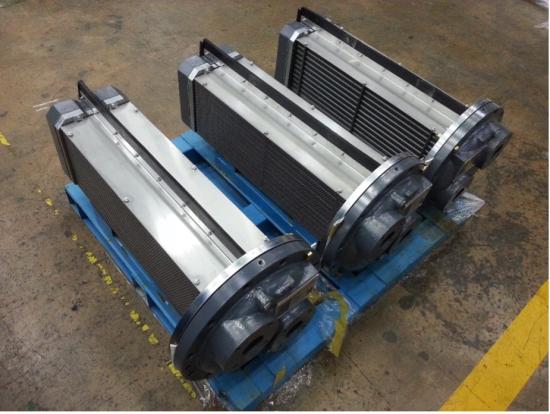
Shell-and-Tube. While the plate fin cooler is a shell-and-tube heat exchanger, some applications call for special shell-and-tube coolers that can comply with general heat exchanger specifications for a project. These coolers are manufactured according to traditional heat exchanger designs and are not tailored to the specific needs of a centrifugal air compressor. These coolers often have tubes with exotic materials and/or larger sizes. These coolers can be custom-designed for any environment, even the most demanding petrochemical applications. These coolers are often larger than the equivalent plate fin cooler.
Air-in-Tube. Another variation of the shell-and-tube heat exchanger design, used for centrifugal air compressor intercoolers, is to use cooling water in the shell and flow compressed air through the tubes. To increase the surface area contact between the air and the wall of the tube being cooled by the water, a sleeve of internal fins is mechanically fixed to the inside of the tube. The center of the sleeve is plugged, so all the compressed air is directed across the cooling fins. These fins serve the same function as fins in a plate fin intercooler. The air-in-tube design results in low pressure drop through the cooler. Its high efficiency allows for more compact, integral intercooler designs. If cleaning of the tubes is required, the cooler must be chemically cleaned.
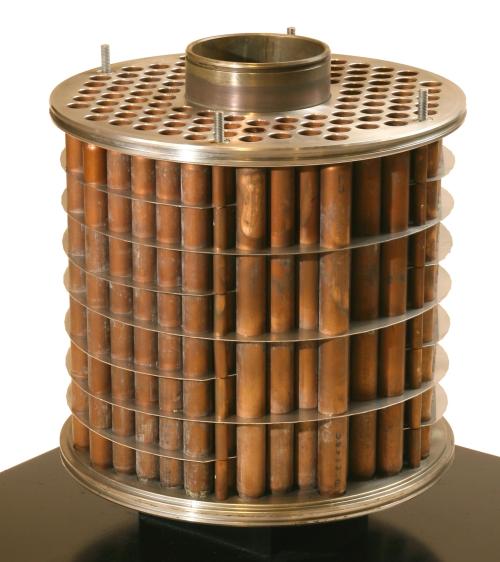
Air-Cooled. The air-cooled intercooler is unique among the variations seen on centrifugal air compressors. It uses ambient air to cool the tube bundle, so it doesn’t need the traditional shell found on most heat exchangers. It uses a fan and plenum to direct air in a cross-flow arrangement across tubes containing the compressed air. As a cooling medium, air is not as efficient as water. Air is limited in its thermal conductivity and ability to store heat. As such, larger quantities of air at higher velocities are required to remove enough heat between stages of compression. An air-cooled intercooler is significantly larger than an equivalently sized water-cooled intercooler and requires additional considerations for the interstage piping. Air-cooled air compressors, however, have a significant advantage at sites with severe water restrictions or even no water at all.
Conclusion
Intercoolers are an essential component of a centrifugal air compressor package. Whether integrated into the airend or mounted separately on the package and piped to their proper locations, intercoolers are required to remove the significant heat of compression between the stages of air compression. The most prevalent cooling medium used in centrifugal air compressor coolers is water; however, air-cooled coolers are an option where no water or contaminated water is available at the site. Proper intercooler design is critical to the air compressor performance, and there are several intercooler options available. Intercooler size, cost, materials of construction, efficiency, reliability and maintenance concerns are design variables allowing for the many types of intercoolers and aftercoolers found on centrifugal air compressor packages and installations. To understand the tradeoffs amongst these design variables and determine which cooler design best fulfills your application expectations, it’s prudent to consult with your compressed air consultant.
About CAGI
The Compressed Air and Gas Institute (CAGI) is the united voice of the compressed air industry, serving as the unbiased authority on technical, educational, promotional and other matters affecting compressed air and gas equipment suppliers and their customers. CAGI educational resources include e-learning coursework, selection guides, videos and the Compressed Air & Gas Handbook. The Centrifugal Compressor Section consists of the following member companies: Atlas Copco Compressors, FS-Elliott, Hanwha Power Systems, Ingersoll Rand and Sullair. For more information, visit http://www.cagi.org.
To read similar articles on Air Compressor Technology, please visit https://www.airbestpractices.com/technology.
Visit our Webinar Archives to listen to expert presentations on Air Compressor Technology at https://www.airbestpractices.com/webinars.
