
How to Select OSHA-Compliant Safety Air Guns for Safer, More Efficient Industrial Cleaning
Among the simplest but most widely used compressed air tools are air guns used for industrial cleaning. Found in a wide range of manufacturing plants and facilities, air guns provide a fast and effective way to remove debris from equipment, conveyors, floors and production areas. Yet despite their simplicity, air guns present safety considerations many plant operators overlook.
The difference between OSHA-compliant and OSHA non-compliant air guns can have major implications for worker safety and corporate liability. Properly designed air guns, known as safety air guns, use nozzles engineered to limit hazardous output pressure while still delivering the thrust required for industrial cleaning. Facilities that understand OSHA requirements and train employees on proper air gun use will be better positioned to avoid injuries and reduce compliance risks.
A Legacy of Air Gun Safety
The history of Guardair Corporation closely parallels the evolution of air gun safety in the United States. Founded in 1942 in Bridgeport, CT, the company manufactured air guns for industrial cleaning applications long before modern workplace safety regulations were established.
When OSHA was created in the 1970s, Guardair helped formulate regulations governing the use of compressed air for industrial cleaning. Concurrently, the company developed and patented what Tom Tremblay, President, Guardair, described as the industry’s first safety air gun.
Since then, the company has expanded through organic growth, acquisitions and ongoing product development. Today, the company manufactures a wide range of safety air guns designed for different industrial applications.
“We're proud of our engineering and product design capabilities,” Tremblay said. “They represent a pretty significant portion of our total sales. If you look at our company today, we’re the largest manufacturer of safety air guns in the U.S. and perhaps the world.”

Compressed Air Cleaning Applications
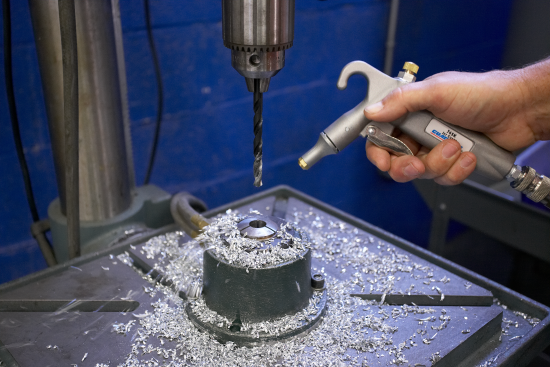
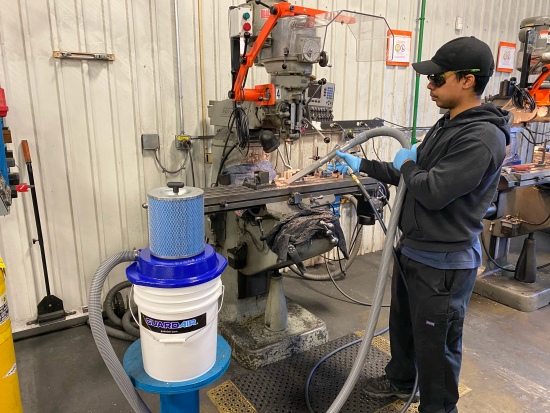
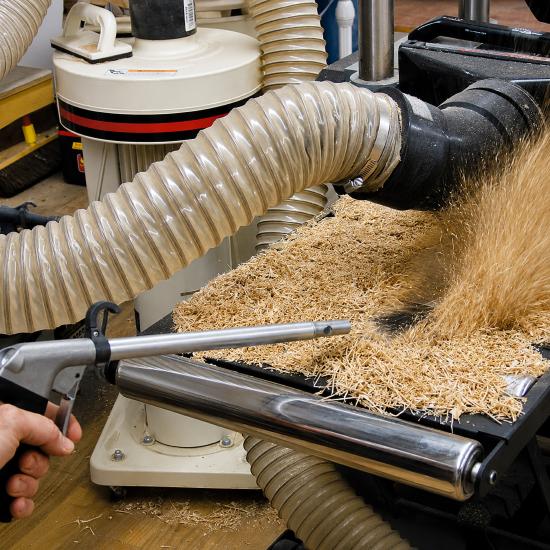
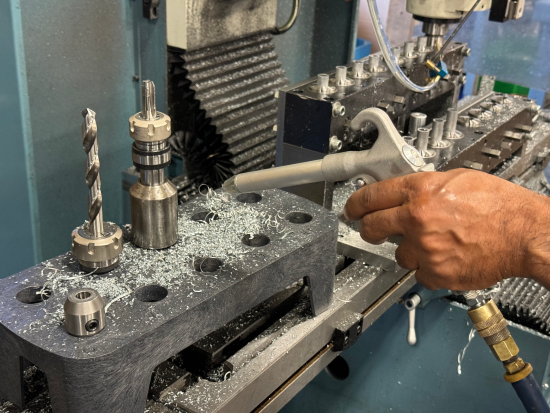
Air guns perform a critical role wherever production processes generate excess waste materials and debris that must be removed quickly and efficiently. According to Tremblay, air guns are commonly used to clean metal chips in metalworking facilities, deal with crumbs and flour in food processing plants, blow off sawdust and shavings in woodworking shops and clean vehicle interiors in transportation maintenance facilities, as well as for general cleanup in grain mills, pulp and paper operations, sawmills and lumber processing facilities.
In many of these applications, cleaning via traditional methods is either impractical or inefficient. Equipment may operate continuously, dirty surfaces may be difficult to access or sanitation requirements may limit the use of brushes and brooms.
“Using compressed air is an effective and efficient way to clean,” Tremblay explained.
“It’s especially useful where machinery needs cleaning but also needs to be in continuous operation.”
Because applications vary dramatically, air guns have evolved into specialized tools designed for different cleaning requirements. Some generate low thrust and are meant for delicate, close-in bench-top work including electronic equipment or precision machinery. Others are designed to generate maximum thrust to move heavy debris. The company’s air guns meet these varied needs, Tremblay said.
“We have high power, we have low power, we have air guns that are used for close-in work. We have air guns that are used for distant work. We have air guns which make a lot of noise. We also manufacture safety air guns with noise-silencing features where noise suppression is a concern.”
OSHA 1910.242(b) Requirements for Air Guns
The key OSHA regulation governing air gun use is OSHA Standard 1910.242(b), which addresses the use of compressed air for industrial cleaning purposes. This regulation focuses on a specific hazard associated with compressed air, namely output pressure. Industrial compressed air systems commonly operate between 80 and 120 psig (5.5 to 8.3 barg). While this pressure range is useful for cleaning applications, serious injury can result if compressed air were to enter the human body.
“OSHA Standard 1910.242(b) states the output pressure of an air gun must be limited to less than 30 pounds of pressure when the tip is blocked,” Tremblay said.
The phrase “when the tip is blocked” is critical to understanding the standard. Some people incorrectly assume the plant compressed air system should be regulated down to less than 30 psig (2.1 barg). In reality, industrial air guns may use full plant air pressure during normal operation. However, when the output nozzle becomes blocked, OSHA has determined 30 psig (2.1 barg) represents the maximum safe pressure under these conditions.
“During operation, if an air gun nozzle tip is pressed against the surface of exposed skin, compressed air could enter the bloodstream through a scratch or cut,” said Tremblay. “This could cause an air bubble or air embolism. Should it travel to your brain, it could be fatal.”
As a result, OSHA-compliant safety air guns incorporate pressure-limiting features to ensure the output pressure when blocked remains below the 30 psig (2.1 barg) threshold.
Air Gun Nozzle Engineering and OSHA Compliance
Modern OSHA-compliant safety air guns achieve compliance through specially engineered nozzle designs rather than reducing the pressure of the plant compressed air system. Manufacturers use nozzle designs allowing full cleaning performance during normal operation while limiting output pressure under blocked conditions.
One example is the venturi nozzle. Under normal operation, air exiting the nozzle creates a venturi effect that draws additional ambient air into the output stream, thereby increasing cleaning power. If the nozzle becomes blocked, air escapes through the side ports and limits the pressure below 30 psig (2.1 barg).
Another approach uses nozzle designs that physically prevent blockage at the outlet. Since the tip cannot be fully blocked, dangerous pressure conditions cannot develop. Other designs incorporate active mechanisms releasing excess pressure when blockage occurs. These engineering solutions allow operators to maintain cleaning effectiveness while meeting OSHA requirements.
Understanding Air Gun Thrust vs. Pressure
Besides meeting OSHA-mandated dead-end compliance, one of the most important technical specifications in air gun selection is thrust developed by the air gun.
“Thrust is the ability to clean surfaces and move debris,” Tremblay explained.
Air gun thrust is measured in pounds. High-thrust air guns move heavy materials and large pieces of debris. Lower-thrust models used in bench-top applications are appropriate for lighter cleaning tasks and delicate equipment. They typically use a ¼-inch airline, consume 6 cfm and generate 0.4 pounds of thrust. At the opposite end of the spectrum, heavy-duty industrial models use a ¾-inch airline, consume 185 cfm and generate up to 13 pounds of thrust.
Heavy-duty, high-thrust models are intended for construction sites or sawmills where operators must move significant amounts of heavy debris. The appropriate choice depends on the cleaning application.
“Use the right tool for the application,” said Tremblay. “You don't need 13 pounds of thrust to clean a computer circuit board.”
OSHA Noise Exposure Standards
In addition to OSHA's compressed-air cleaning requirements, facilities must also consider OSHA Standard 1910.95, which addresses occupational noise exposure. Air guns can contribute to high workplace noise levels. High-thrust models often generate substantial noise, particularly when operating continuously. To address this issue, manufacturers offer silencer nozzles, reducing noise and maintaining OSHA compliance.
OSHA's noise regulations involve monitoring workplace exposure over extended periods and evaluating cumulative decibel levels throughout an employee's shift. Because air guns can contribute to total facility noise exposure, selecting quieter equipment is an important part of compliance efforts.
When selecting air guns, plant operators should evaluate whether workers require hearing protection, if air guns are operating in close quarters or if nearby coworkers might be affected by cleaning activities.
Common Air Gun Misuse and Abuse
Although OSHA-compliant air guns are designed with safety in mind, improper use can still create significant hazards, with horseplay being the most serious misuse issue. Workers occasionally misuse compressed air by directing it at co-workers, pressing nozzles against bare skin or misusing air guns in other dangerous ways. Compressed air can damage hearing, rupture eardrums or cause severe internal injuries if directed into body cavities.
Another common problem involves modifying air guns. Some workers remove nozzles or alter safety features to try to increase performance. Others tape over venturi ports because they mistakenly believe air is escaping through the openings. Venturi ports actually increase thrust and are an essential safety feature.
“Sometimes workers cover the venturi ports with duct tape thinking air is escaping,” Tremblay said. “In fact, venturi ports draw in outside air to deliver more power. Covering these ports essentially turns the safety air gun into a non-compliant and potentially dangerous open pipe.”
Another frequent misuse involves self-cleaning. At the end of a shift, workers often use compressed air to remove dust, chips or debris from clothing and skin. Environmental health and safety professionals discourage this practice because airborne particles can become embedded in the skin or enter the eyes.
Homemade Air Guns and Their Hazards
Among the most concerning violations encountered during OSHA inspections are homemade air guns. These improvised devices often consist of little more than a pipe or tube connected to compressed air through a shutoff valve. Because they lack OSHA-compliant nozzle technology, they deliver full system pressure directly from the outlet.
“They're just an open pipe and are very dangerous,” said Tremblay.
Homemade devices create two significant hazards. First, they exceed OSHA output pressure requirements. Second, if dropped while in use, they can violently whip and cause injuries. Commercially available safety air guns address these concerns through OSHA-compliant nozzles and spring-loaded trigger mechanisms that automatically shut off airflow when released.
What OSHA Air Gun Audits Involve
Compliance audits involving air guns are straightforward. EHS personnel walk through the facility, workstation by workstation, and assess air gun condition and compliance. They look for non-compliant nozzles, modified or homemade air guns, missing safety features and damaged equipment.
The company offers an OSHA Compliance Kit designed to help users evaluate air gun compliance before OSHA inspections occur. The kit includes educational materials, a training video and a pressure-testing gauge. The gauge measures blocked-tip pressure from 0 to 100 psig (0 to 6.9 barg) with green markings indicating compliance below 30 psig (2.1 barg), while red markings indicate non-compliance.
“Pressing the gauge inlet against the tip of the air gun measures the output pressure,” Tremblay said. “Compliant air guns will register less than 30 psig.”
OSHA Penalties for Air Gun Non-Compliance
Facilities operating non-compliant air guns may face OSHA warnings or financial penalties. According to Tremblay, fines commonly fall in the range of $8,000 to $10,000 per occurrence, although actual penalties vary based on circumstances.
Several factors can influence enforcement actions, including the number of violations, previous inspection history, severity of hazards, the presence of injuries and overall safety compliance.
“If an OSHA inspector discovers non-compliant air guns, we're talking an OSHA penalty of some sort,” said Tremblay.
Repeated violations may receive increased scrutiny, particularly if inspectors identify broader safety management deficiencies. Facilities may also face deeper investigations if inspectors determine unsafe practices are widespread or the facility has a history of injuries.
Selecting the Right Safety Air Gun
Choosing an OSHA-compliant safety air gun involves more than simply verifying regulatory compliance. Operators should begin by evaluating the cleaning application itself. Key selection factors include required thrust, debris type, cleaning distance, compressed air line size, ergonomics, noise levels, chip flyback protection, and OSHA compliance.
Some applications require compact bench-top tools while others benefit from extended-reach designs. The company’s Long John models, for example, are available in lengths ranging from 12 inches to 72 inches, with longer custom versions available.
Ergonomics also play an important role. Users can choose pistol-grip or thumb-actuated models depending on worker preference and workstation layout. Chip flyback protection helps prevent debris from being directed back toward operators. Silencer nozzles reduce occupational noise exposure.
Regardless of configuration, the nozzle remains the most important compliance component. Plant operators should verify any air gun they purchase incorporates technology designed to satisfy OSHA requirements.
Conclusion: Air Gun Safety Education Remains Critical
Even the best-designed air gun cannot eliminate risks created by poor practices on the shop floor. Tremblay emphasizes the importance of training and education: Employees must understand why homemade or modified air guns are dangerous, why horseplay is prohibited and how OSHA standards apply to everyday cleaning activities.
Facilities combining OSHA-compliant safety air guns with ongoing safety education are more likely to maintain safe operations and avoid costly violations.
Properly engineered safety air guns demonstrate productivity and safety don’t have to be competing priorities. By understanding OSHA requirements, selecting application-specific equipment and enforcing safe operating practices, users can achieve effective cleaning performance while protecting workers and maintaining compliance.
To read articles on Compressed Air Instrumentation, visit https://www.airbestpractices.com/technology/instrumentation.
For expert presentations, visit our Webinar Archive Section dedicated to Compressed Air Technology at https://www.airbestpractices.com/webinars.
