Industrial Utility Efficiency

Air Compressors

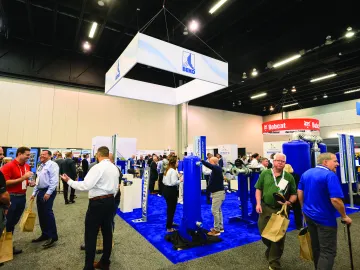
From October 29-31, 2024, professionals who operate, maintain and design industrial compressed air, vacuum, blower, nitrogen generation, process cooling and HVAC systems gathered at the Cobb Galleria Centre in Atlanta, GA, for the 6th annual Best Practices 2024 EXPO & Conference. The event featured two tracks of conference presentations and panels.
Key Considerations for Installing Centrifugal Air Compressors

Compressed Air Best Practices® Magazine and the Compressed Air and Gas Institute have been cooperating on educating readers on the design, features, and benefits of centrifugal compressor systems. As part of this series, Compressed Air Best Practices® (CABP) Magazine recently caught up with the Compressed Air and Gas Institute (CAGI). During our discussion, we reviewed some of the things readers should consider when installing a centrifugal compressor system.

10 Little-Known VSD Air Compressor Tweaks

The introduction of rotary screw air compressors controlled by variable speed drives (VSDs) is one of the best energy efficiency innovations introduced to the industry in the past few years. This style of compressor control can significantly reduce the energy wasted by compressors running in the unloaded condition. But the type of VSD control offered by various manufacturers can differ, and some of these differences can affect the efficiency of the system. This article discusses some little known tweaks to VSD compressor control, including some using hidden features that can sometimes be implemented to enhance the savings gained by the installation of this type of compressors.

Understanding Centrifugal Air Compressor Capacity Controls

Centrifugal compressors are dynamic, and each has a characteristic curve of rising pressure as capacity decreases. Without any control system, the compressor would operate along this natural curve. A centrifugal compressor's flow and pressure are typically controlled by a combination of an inlet control device and an unloading valve (UV).

Variable Inlet Guide Vanes Boost Centrifugal Air Compressor Efficiency

Compressed Air Best Practices® (CABP) Magazine recently caught up with the Compressed Air and Gas Institute (CAGI) to discuss variable inlet guide vanes (IGV). The following interview describes how centrifugal compressor efficiency can be improved thanks to recent developments in IGV technology.

How Inlet Conditions Impact Centrifugal Air Compressor Performance

Compressed Air Best Practices® (CABP) Magazine recently spoke with Rick Stasyshan, Compressed Air and Gas Institute’s (CAGI) Technical Consultant, and Mr. Neil Breedlove of CAGI's Centrifugal Compressor Section and member company, Atlas Copco Compressors, about centrifugal air compressors. Specifically, the discussion outlined how various inlet conditions can impact the performance of centrifugal air compressors.

Centrifugal Air Compressor Basics: Deciphering Manufacturer Performance Curves

In general, this article focuses on the operating principles of centrifugal air compressors, discussing them in simple terms to provide an understanding of application limitations and opportunities. One primary goal is to define often-confusing terminology, such as “rise to surge,” stonewall and surge,” “mass flow,” and “dynamic compression.” This article is not intended to be an engineering discussion of the various types and designs of centrifugal and other air compressors, but rather, a guideline for deciphering operating curves and understanding general performance.

11 Key Considerations For Selecting a PET Air Compressor System

In 1979 I received a call from a business friend that had just purchased his first single-stage base cup blow machine. He was surprised to find out that he actually needed something more than 100 psi of plant air to blow bottles. This was my entry into engineering a polyethylene terephthalate (PET) compressor system. Since then, I have engineered and delivered over 350 systems—from Tobago to Tibet—and many locations in between.

Sidel and Krones Blow Molders Stretch Conservation Potential

The beverage industry has been using polyethylene terephthalate (PET) 2-liter plastic bottles primarily for packaging carbonated soft drinks since the 1970s. As that market has grown to encompass bottled drinking water, stretch blow-molding machines continue to produce those plastic bottles. The concept is simple: A pre-form plug is inserted into the blow molding machine heated, and compressed air is injected, “blowing” into the pre-form to create the bottle.

Acrylon Plastics Optimizes Compressed Air Supply

Acrylon Plastics located in Winkler, Manitoba, Canada manufactures an extensive variety of custom plastic parts for a wide range of end use applications. Years ago changes to their production volumes increased the compressed air flows to above what their compressed air system could deliver. As a result the plant pressure would fall to low levels during production peak demands, which negatively affected sensitive compressed air powered machines. In addition to this during light plant loading conditions the air compressors would run inefficiently. Plant personnel tried a variety of strategies to deal with the plant peaks, with the most efficient solution coming as a result of installing VSD style compressors and pressure/flow control.

Sullair Celebrates 50 Years of Air Compressor Excellence

A culture change is in the air at Sullair, a pioneer in air compressor technology, as the company celebrates its 50th anniversary. A global manufacturer of rotary screw air compressors used to power air-driven industrial equipment and tools used in manufacturing as well as the energy, mining and chemicals industries, Sullair operates five manufacturing facilities worldwide.