Relatively few people realize that for a variety of industrial manufacturing applications, from air knife drying to simple blow-off nozzles, the use of high pressure compressed air that bleeds into the atmosphere represents a significant waste of energy.
Finding the most effective, reliable and economical method for separating and concentrating die lubricant is no easy task for die casting plants – and the situation at the Metaldyne aluminum die casting plant in Twinsburg, Ohio was no different.
This steel processing facility has been operating for over one hundred years. This facility is part of a large corporation with numerous plants around the world. This audit focused on the compressed air system on one side of the Works which we will call the “North Plant”.
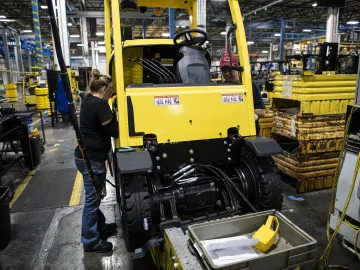
Motor Coach Industries, headquartered in Schaumburg, Illinois, is the largest manufacturer of intercity tour coaches for the tour, charter, line-haul, scheduled service, commuter transit and conversion markets in the U.S. and Canada. The company operates a four screw-type air compressor system at its Clarence Avenue plant in Winnipeg. To maintain adequate system pressure at the plant, Motor Coach was forced to run all four compressors 24 hours a day, seven days a week.
By Rod Smith, Compressed Air Best Practices® Magazine
A four thousand, five hundred and fifty pound (4550 lbs.) race car is running at 170 mph and facing wind resistance of 150 mph. The car then enters a curve creating a three-degree “yaw” (the change in angle from the direction the car is headed and the airstream). The car struggles to maintain speed as the yaw changes and the dynamic downforce load on the car changes. Suddenly, the driver-less car comes to a stop on the stainless-steel track...
New Flyer Industries is a Winnipeg based heavy duty bus manufacturer, supplying vehicles to the US and Canadian markets. The company specializes in vehicles with†alternative-fuel drives such as electric trolleys, gasoline-electric and diesel-electric hybrid vehicles; as well as standard diesel buses.
The NFPA 99 (National Fire Protection Agency) Standard for Healthcare Facilities (2005 Edition) is the current Code by which Healthcare facilities in the U.S. design their compressed air systems. The NFPA 99 Standard covers many requirements for medical gases, with compressed air being just a component of the Standard.