By Bill Scales P.E., Scales Industrial Technologies
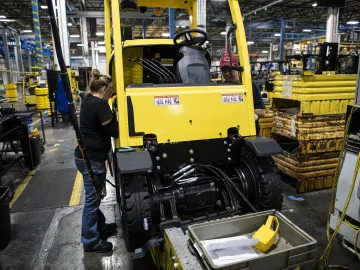
This stamping plant is a 2.5 million-square-foot facility with over two thousand employees. At the time of the assessment, the plant was processing approximately 1,600 tons of steel per day into automotive vehicle components and parts such as body parts.
A recent comparative vacuum technology study performed by Dr. Kingman Yee, as part of a Chrysler Summer Intern Professors Program, found that air consumption could be reduced by 98% when equipping a robot’s end-of-arm tooling with COAX® technology and a Vacustat™ check valve.
This facility processes bulk food ingredients into finished packaged food products. The factory belongs to a division of a large corporation and was spending \$732,342 annually on energy to operate their compressed air system. This system assessment detailed twelve (12) project areas where yearly energy savings totaling \$214,907 could be found with a minimal investment of \$68,350. Due to space constraints, this article will detail only the higher impact project areas. The over-all strategy for improving this air system centers on improving specific power performance of the #3 centrifugal air compressor and reducing over-all demand with compressed air savings projects.
Faced with rising energy costs, a large electroplating company sought to improve the efficiency and reliability of its compressed air system. After getting a quote from their vendor on a new 300-hp compressor to replace an existing unit, the company sought a comparison quote due to the significant investment the new compressor represented. Based on a recommendation from one of their customers, they turned to Scales Industrial Technologies.
Utilities have been cleaning their boilers for many years using either steam or high-pressure air. In the past, when air was used, due to the size of the boilers and the reasonable quality of fuel used, a relatively small amount of cleaning was required.
By Paul R. Miller, Vice President and General Manager, Nilfisk CFM
In February of 2008, a sugar plant near Savannah, Georgia suffered the ultimate tragedy. Fouteen employees were killed and 40 injured when finely ground motes of sugar dust ignited, setting off a violent blast. If the fatalities and a tarnished reputation weren’t enough, the Occupational Safety and Health Administration (OSHA) then fined the company more than 8 million dollars in workplace violations related to combustible dust.
By Dan Ryan, Division Engineering Manager, Parker Hannifin Corporation
Industry standards serve a very important purpose for the end users of compressed air equipment. If the standards are well written, they can help to promote the equipment that they govern, as long as the equipment manufacturers properly apply and promote the standards.