Big Improvements at a Small Sawmill
By Ron Marshall, Marshall Compressed Air Consulting
[ Read Full Story ]
Industrial Utility Efficiency

By Nasr Alkadi, Ph.D., CEM, CSRM, Strategic Energy Management Consultant and Coach, CLEAResult
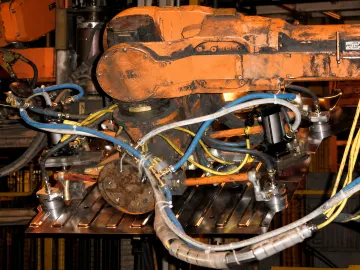
This article focuses on a project to replace vacuum cups with spring-return magnetic pickups for handling ferrous metal parts at an automobile assembly plant in Missouri. The application is most familiar in automotive stamping and body shop operations, but the lesson applies to any plant using vacuum cups to grab steel blanks, panels, brackets or formed parts. The original equipment in this case study used vacuum cups served by venturi devices.
By Ron Marshall, Marshall Compressed Air Consulting
By Russell Morine, Compressed Air Systems Evaluation Specialist, The Baker Group
By Bill Nevills, Certified Fluid Power Specialist, Valin Corporation
By Hank van Ormer, Contributing Editor
By Paul Edwards, President, Compressed Air Consultants, Inc.
By Don van Ormer, Air Power USA
By Nicolas De Deken, EnergAir
By Ron Marshall, Marshall Compressed Air Consulting
By Ron Marshall, Marshall Compressed Air Consulting
By Ron Marshall, Marshall Compressed Air Consulting
By Don van Ormer, APEnergy
By Consumers Energy Business Solutions
By Hank van Ormer, Air Power USA
By Don van Ormer, APenergy
By Roderick Smith, Compressed Air Best Practices® Magazine
By Jerry Zolkowski, PE, CEM, Senior Engineer, Consumers Business Energy Efficiency Solutions
By Martina Bopp
By Ron Marshall for the Compressed Air Challenge®
By Mike Castelli, Director Global Business Development, Case Handling Products, Lantech
By Ron Marshall for the Compressed Air Challenge®
By John Molnar, Rogers Machinery Company
By Ron Marshall for Compressed Air Challenge®
By Vincent Duvernois, Partner – SKV Services, Stephane Larcade, President – SKV Services, and Jean Pilnard, Export Manager – COMEP
By Compressed Air Best Practices® Magazine
By Ron Marshall for the Compressed Air Challenge®