End Uses

By Nasr Alkadi, Ph.D., CEM, CSRM, Strategic Energy Management Consultant and Coach, CLEAResult

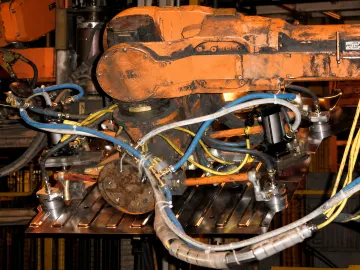
This article focuses on a project to replace vacuum cups with spring-return magnetic pickups for handling ferrous metal parts at an automobile assembly plant in Missouri. The application is most familiar in automotive stamping and body shop operations, but the lesson applies to any plant using vacuum cups to grab steel blanks, panels, brackets or formed parts. The original equipment in this case study used vacuum cups served by venturi devices.

Measuring Energy Savings at Verallia

By Rod Smith, Compressed Air Best Practices® Magazine

Compressed Air Best Practices interviewed Gregory Rhames, Asset Reliability Manager/Energy Manager at Verallia. As background, Verallia is the packaging division of Saint-Gobain. Verallia employs 15,500 people globally and makes about 25 billion glass bottles and jars each year. We employ 350 people at Madera where we produce about 1 million wine, champagne and sake bottles per day.

Bottler Best Practices in California

By Creg Fenwick and Kyle Harris, Accurate Air Engineering

Bottling companies and breweries, in California, are benefiting from a three-step system assessment process aimed at reducing the electrical consumption of their compressed air systems. The three-step process reduces compressed air demand in bottling lines by focusing on open blowing and idle equipment, and then improves the specific power (reducing the energy consumption) of the air compressors.

Energy-Savings at Milk, Cheese, and Ice Cream Plants

By Ron Marshall for the Compressed Air Challenge®

Compressed air system refinements have cut operating costs at a Milk Plant located in Winnipeg Manitoba, Canada by 62%, for annual savings of nearly $30 000. The improvements were made following a compressed air audit that recommended consolidating two compressed air systems into one, installing a variable speed drive compressor, and making a handful of additional basic improvements.

Kellogg’s Eggo Decreases Energy Consumption by over 675,000 kWh

By Patricia Boyd, Ecos Air

This article describes a compressed air retrofit project implemented at Kellogg’s Eggo factory located in San Jose, California. Kellogg’s continues to realize both annual energy savings and quality improvements because of the upgrade. In addition, Kellogg’s received a substantial utility incentive from Pacific Gas and Electric Company, which was based on the achieved energy savings.

New AODD Pump Controls Reduce Compressed Air Consumption

By Mark McCourt and Dean Thornberry, IDEX AODD

Air-operated double-diaphragm (AODD) pumps are known for their positive attributes of handling fluids that are heavily laden with solids, abrasive materials, shear sensitive liquids (paints and coatings) and the ability to pump soft solids without damaging the product. They are also popular because they are lightweight, portable and easy to use due to their pneumatic power.

Three Demand-Side Projects at a Pharmaceutical Plant

By Hank Van Ormer, Air Power USA

This pharmaceutical plant spends $265,100 annually on energy to operate the compressed air system at their facility. This figure will increase as electric rates are projected to be raised from their current average of 7.7 cents /kWh. The set of projects identified in the compressed air system assessment could reduce these energy costs by $139,300 per year (52%).

Industrial Sandblasting – Where Does All the Air Go?

By Don van Ormer & Scott van Ormer, Air Power USA

“Sandblasting” is one of the oldest and most used methods of metal treatment. Various abrasive materials may be loaded manually or by a vacuum system pulling the “grit” from a storage tank. A control valve then operates with the compressed air (bypassing the vacuum pump), being forced into the tank pressurizing the receiver. When the high pressure compressed air goes out the discharge line, it pulls the appropriate amount of grit with it to effectively impinge against the targeted metal surface.

Starting a Long Distance Relationship with Your Compressed Air System

By: James Green, Product Marketing Manager and Jay Johnson, Portfolio Manager for Controls & Automation , Ingersoll Rand Industrial Technologies

When was the last time you visited your compressor room? A week ago? Several weeks ago? If you are like many, you went in for the last scheduled maintenance interval and have rarely been back since. Air compressors, dryers and other air system components have become more reliable and self sustaining from a maintenance standpoint with each generation, requiring less and less human intervention.

Mattei Dresses Up a Textile Compressed Air System

By Compressed Air Best Practices®

This textile plant uses compressed air in their knitting, sewing, and dye house operations and needed a system designed for the significant fluctuations in demand. Compressed air demand profiles were placed into four segments; 1st shift peak demand and minimum demand, and 2nd shift peak demand and minimum demand.

Energy Saving Opportunities in Blowoff Applications

By Ted Clayton, Kaman Industrial Technologies

Assessing payback on engineered air nozzle and blower upgrades There are a variety of means factories can use to remove or “blowoff” moisture from a package. Open tubes or drilled pipe are often viewed as simple low-cost methods. However, there are considerable drawbacks to these approaches, most notably – increased operating expense. While they may be convenient and inexpensive in the short term, these approaches often cost 5-7 times more to operate than preferred alternatives.

Optimizing Pneumatic Systems for Extra Savings

Edits by David Booth, Jan Zuercher, Bill Scales

Compressed air users looking for energy reduction often identify their air compressors as a prime area for savings potential. But …what about end uses? There are a large number of obvious measures that can be implemented, such as leakage reduction, reducing open blowing and eliminating inappropriate uses..however, there are other more technical opportunities available that involve properly specifying or redesigning existing pneumatic circuitry in compressed air operated machines and processes.

OEM MACHINE DESIGN. Pneumatics: Sizing Demand Users

By Scot Foss, Air’s a Gas Inc.

Most systems are sized on the supply side at many times more volume and significantly higher pressure than is actually necessary to support the real demand plus a fudge factor generally created out of fear. I am sure that had the OEM defined what is not only minimally necessary in terms of mass flow at density (pressure and temperature), but also with the intent of the highest possible efficiency, we would approach things very differently.

Compressed Air Leak Measurement Leads to Savings

By Hank Van Ormer, Air Power USA

This Midwestern prepared food company now spends $269,463 annually on energy to operate their compressed air system. This figure will increase as electric rates are raised from their current average of 6.2 cents per kWh. The set of projects recommended below will reduce these energy costs by $112,902 or 41%. In addition, these projects will enhance productivity and quality and reduce equipment maintenance costs. Estimated costs for completing the projects total $146,102, which represents a simple payback of 15.6 months.

A Kroger Company Bakery Saves Energy

by Beth Tompkins, JetAir Technologies, LLC.

Recently, The Kroger Company’s Indianapolis bakery identified the use of compressed air in a blow-off and conveyor gap transfer as a major source of energy loss and cost waste. According to the U.S. Department of Energy, “inappropriate use” of compressed air like blow-off produces high pressure atmosphere bleed leading to significant energy loss and unnecessary operational costs. Carrying a 10-15% efficiency return (according to the Department of Energy), compressed air applications can often be achieved more effectively, efficiently and less expensively with alternative solutions using a high flow rate and moderate pressure.

Compressed Air System Analysis

Developed by William Scales and David M. McCulloch for the Compressed Air Challenge®.

A comprehensive compressed air system analysis should include an examination of both air supply and usage and the interaction between the supply and demand. Auditors typically measure the output cfm of a compressed air system and the input kW, calculate energy consumption in kilowatt-hours, and determine the annual cost of operating the system. The auditor may also measure total air losses caused by leaks and locate those that are significant.

Pneumatic System Assessments Save Energy

By Jon Jensen, Energy Conservation Manager, SMC Corporation of America

When it comes to conserving energy in compressed air nothing is sexier than a big, old, oil-free 300 horsepower variable speed drive air compressor coupled with a heat of compression dryer tied to an energy management system with all the trimmings. If you’re like me, it’s hard not to let out a manly grunt after reading that sentence.

Compressed Air Auditing - What You Should Expect!

By: Scot Foss, Air's a Gas.

With energy cost increasing at 7.5% per annum for the past few years, most facilities managers and maintenance professionals are looking for the best opportunities for excellent return on investment projects, which can drive their operating costs in the opposite direction. Compressed air is an area where significant improvements are readily available.

Compressed Air Piping Distribution Systems

By Gary Wamsley, PE, CEM, JoGar Energy Services

Perhaps your facility recently had a compressed air system survey, conducted by an air systems services company, that resulted in a couple of major recommendations, such as: • Install a new smaller compressor and new control systems on all of the units • Repair the many air leaks (identified as 30% of your system capacity)

The Systems Approach. What are Your Demands?

By the Compressed Air Challenge®

A basic element in the Compressed Air Challenge® (CAC) philosophy is that compressed air system optimization should be addressed using the “Systems Approach”. This method recognizes that improving and maintaining peak compressed air system performance requires addressing both the supply and the demand sides of a system and understanding how the two interact. “The road to energy efficiency involves more than just fixing the leaks,” says Ross Orr, an experienced auditor with Scales Industrial Technologies and a certified CAC instructor.

Inappropriate-Use Assessment Saves 1,881 scfm

By Hank Van Ormer, Air Power USA

This factory currently spends $735,757 annually on the electricity required to operate the compressed air system at its plant. The group of projects recommended in the system assessment will reduce these energy costs by an estimated $364,211 (49% of current use). Estimated costs for completing the recommended projects total $435,800. This figure represents a simple payback period of 14.4 months.

Compressed Air Leaks: Fact vs. Myth

By Hank Van Ormer, Air Power USA

Compressed air leaks - every system has them. Is a leak identification and control program economically rewarding and/or necessary? Upper management sometimes doesn’t recognize the true cost of not repairing air leaks. Knowing the high cost of compressed air, why wouldn’t every facility with a compressed air piping system implement a continuous leak identification and repair program?

Printing Facility Reduces Air Demand

Ron Marshall, CET, CIM, Manitoba Hydro

This article will focus on a compressed air system assessment done at a printing facility in Canada. The energy costs at the time, in Manitoba, were $0.025 per kWh and the installation was of just 65 horsepower of air compressors.